














“The demand for district heating is exploding,” says Mr Decorvet. An urgency to move away from fossil fuels is leading to a rush – particularly in Europe – for bigger and beefier heat pump systems that can power entire towns. But who has the biggest, megawatts-wise?
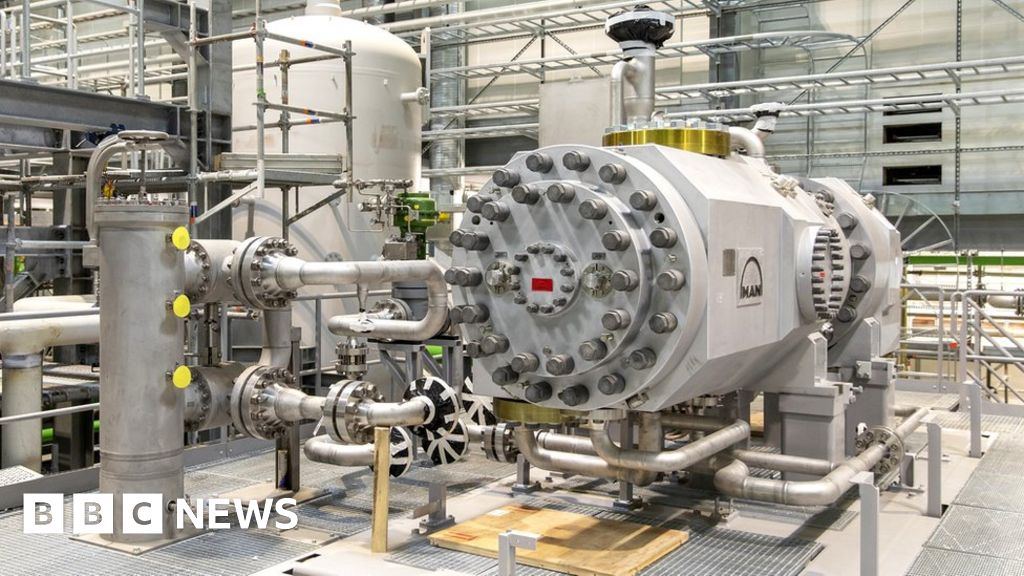
It might seem like a relatively straightforward question but it is actually quite tricky to answer definitively. Not least because heat pumps don’t tend to work at maximum capacity all the time. In Esbjerg, MAN ES’s heat pumps will run at about half their potential output, for instance.
And trying to compare the world’s largest heat pump systems is difficult because, often, they are made up of multiple smaller heat pumps chained together. Take the district heating system in Stockholm, Sweden, often referred to as the largest heat pump set-up in the world.
This is probably true, it has a maximum capacity of 215MW – but that total is the sum of seven heat pumps, two 40MW and five 27MW devices, a spokesman for energy provider Stockholm Exergi explains.
Elsewhere in Sweden, Gothenburg has a 160MW heat pump system, external that consists of four units. Two of them are actually bigger than those in Stockholm, with capacities of 50MW each.
They have been in operation since 1986 and probably hold the title of the most powerful individual heat pumps currently in use, though they are clearly rivalled by newer devices such as those made by MAN ES.
Last year, German chemicals firm BASF and MAN ES announced their intention to build a 120MW heat pump that would, reports suggested, be the world’s largest, external.
It would have provided heat for industrial uses at a site in Ludwigshafen. However, it was not to be. “BASF has decided not to proceed with the project,” a spokesman told the BBC. The firm is exploring other potential heat sources instead, which it hopes will be more economically attractive.