











A long list of other vertical farms have run into trouble in recent months.
French firm Agricool went into receivership earlier this year, Pennsylvania-based Fifth Season shut down in late 2022, Iron Ox of California has laid off nearly half its workforce and Infarm has closed its operations in Europe – making 500 staff redundant.
“Infarm has decided to shift its geographical focus from Europe to high-potential regions better suited for indoor farming, with low energy prices and healthy market demand,” the company says in a statement.
Besides the major economic challenges that have hampered many industries during the last few years, within vertical farming a debate rages over the extent to which some companies may have set themselves up for a fall.
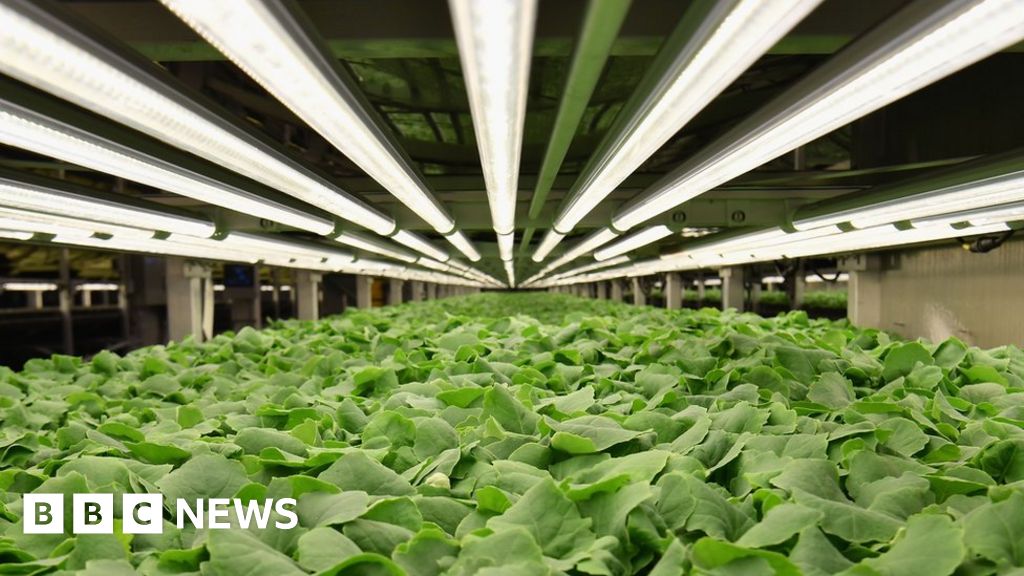
“My opinion is that we’ll continue to see failures. It is bad,” says Andrew Lloyd, chief operating officer at Intelligent Growth Solutions, which makes equipment for vertical farms. “Many people are growing the wrong crops, they’re very heavily focused on leafy greens.”
He also argues that some have foolishly attempted to design and build their own technology – such as robots that tend to the baby plants as they develop.
That might sound like too easy a riposte for someone who sells such technology himself but Mr Lloyd does make a good point, says Mark Lefsrud at McGill University in Canada, who consults for the industry.
“I’ve seen to the extreme where one company redeveloped their own pipe,” he says. “Literally just a plastic pipe to transfer water through.
“I was like, ‘I think the pipe has been developed’.”
What people don’t often hear about vertical farming, though, is how an ability to care for plants, regardless of what technology you use, really matters, adds Mr Lefsrud.
He says he has occasionally been called in by firms fretting over copious trays of crops that have started to die.
“You need somebody who’s going to be full-time,” he has told them, explaining that farming means giving constant attention to living things – not just firing up a few gadgets and waiting for the profits to roll in argues Mr Lefsrud.
“You have to be growing them properly all the time. You can’t go, ‘I’m not gonna work this weekend because I want to have a party’ – and all the plants die on you. Which I’ve seen repetitively,” he says.