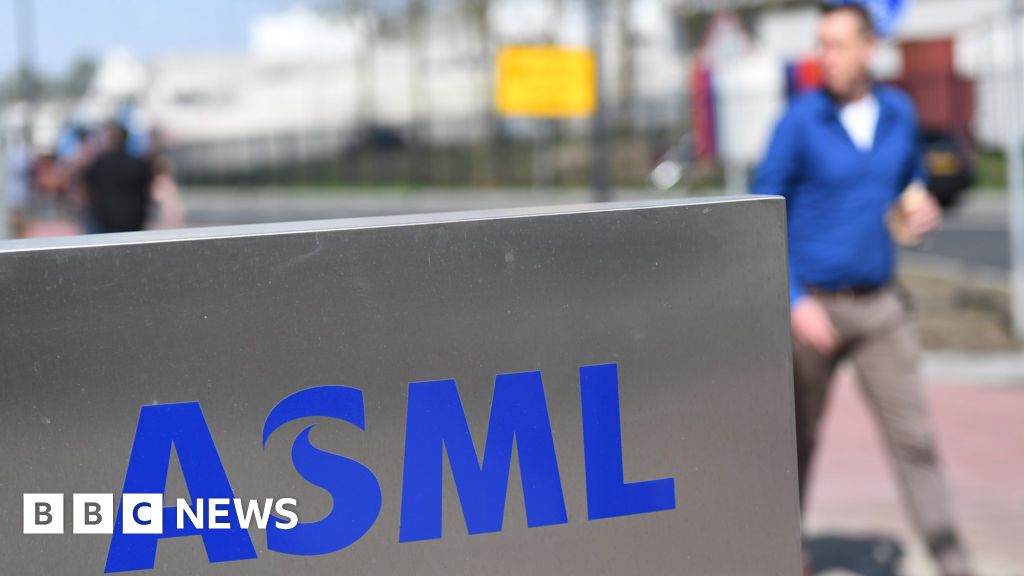






Technician, Bram Matthijssen was putting together one of ASML’s latest designs when we visited the factory. Mr Matthijssen works in one of the cleanest environments on the planet.
“There are moments where we have to wear gloves over gloves to make sure we don’t leave any finger prints, to make sure we don’t bring any extra dust into the machine.
“A single finger print… can cause significant damage to the machine,” he says.
The machines themselves are very substantial and complex. One extreme ultraviolet (EUV) machine can take a year to assemble and deliver.
Last year the company delivered only 50 of their highest specification model and 400 machines in total.
Those sales, plus income from the management and upgrading of existing machines, made the company 21.2bn euros ($22.7bn; £18.9bn) last year.
The orders they have in the pipeline are worth double that. The sales growth means a growing workforce, up by a third over the last 12 months.
Wayne Lam, a consultant with technology research firm CCS Insights, says the machines ASML make take years, if not decades, to develop and perfect.
ASML has been working on its highest specification machines since the early 2000’s, leaving other companies in the field with quite a bit of catching up to do.
“I’m sure there are competitors in the works… however, in the near term there isn’t any true competitor to ASML,” he says.
Not bad for a company once described by the BBC as “relatively obscure”, a quote which Mr Hofman has printed on a hoodie.