











At Leibstadt, Switzerland’s largest and youngest nuclear power plant, half of the uranium supply currently comes from Russia. There, as elsewhere, there’s a scramble to source more uranium from outside the Russian sphere of influence.
The backdrop to this is that the Russian occupation of the Zaporizhzhia nuclear facility is raising fresh fears about the weaponisation of nuclear science.
Fabian Lüscher, who heads the nuclear energy section at the Swiss Energy Foundation (SES), says that Europe’s ageing nuclear fleet is not adapted to deal with contemporary terrorist attacks and cyberattacks. “You even have to think of those very unlikely possibilities when planning risky infrastructure,” Mr Lüscher argues.
And then, of course, there’s the problem of nuclear waste.
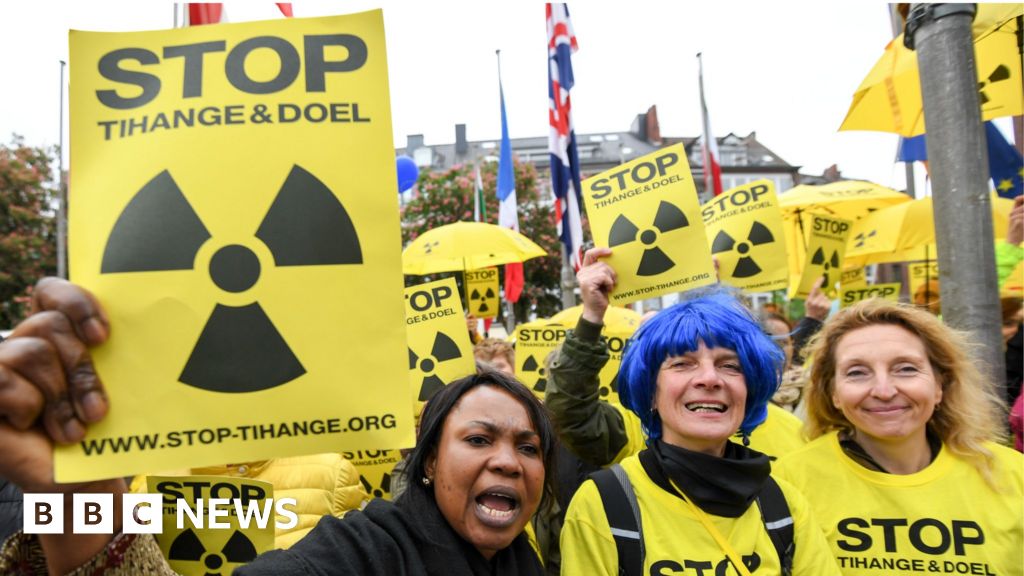
Angélique Huguin is part of a group of activists affiliated with the anti-nuclear movement Sortir du nucléaire, who have taken up residence near the Cigéo nuclear research laboratory in northeastern France.
The activists share a home in the charming commune of Bure, amidst stone houses with bright blue shutters.