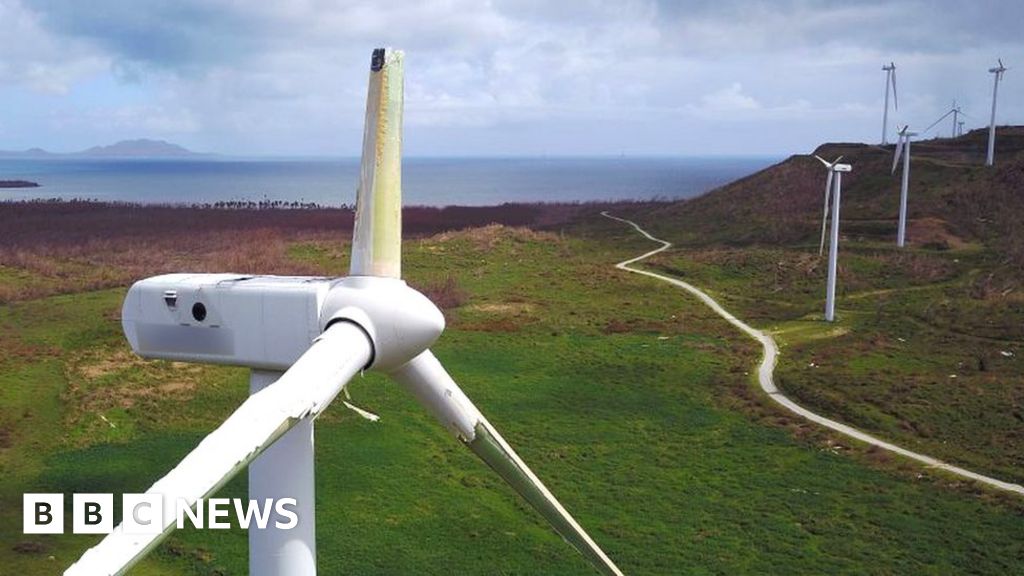


















Despite the meteorological challenges in such regions, the expansion of wind energy is expected there in the coming years and decades.
Today’s turbines already put up with some powerful gales. Those positioned off the northeast coast of the UK in the North Sea operate in wind speeds of up to 50mph or so, after which point they are switched off, notes Simon Hogg at Durham University, who holds the Ørsted chair at the university, which is funded by energy firm Ørsted.
Technically, such turbines are designed to survive even higher wind speeds.
Leon Mishnaevsky of the Technical University of Denmark suggests that wind turbine blades are generally quite reliable. These days, they are made from strong but lightweight carbon fibre composites and automated manufacturing processes help to ensure the uniform placement of the fibres, which is important for the blades’ robustness, he notes.
Wind turbine makers also perform a range of stress tests on blades to ensure that they are up to scratch.
This can include attaching large “exciters” to the blades, which bounce up and down, simulating the repeated stresses of winds on the structure. Giant blades are also sometimes bent to the point of breaking, says Prof Hogg, which helps to confirm the maximum loads they can bear.
But the fallibility of turbines, especially the biggest ones, is becoming more apparent as time goes by. Insurer GCube notes in a recent report, external that offshore wind losses rose from £1m in 2012 to more than £7m in 2021.
Plus, machines with capacities larger than 8MW can suffer component failures within just two years of installation, the firm says, more than twice as fast as 4-8MW devices.