









Perhaps the last of those is the most dramatic.
Malcolm Ridley, Chief Test Pilot of Airbus’s commercial aircraft, reassured us that the risk of being involved in an air accident is “vanishingly small”.
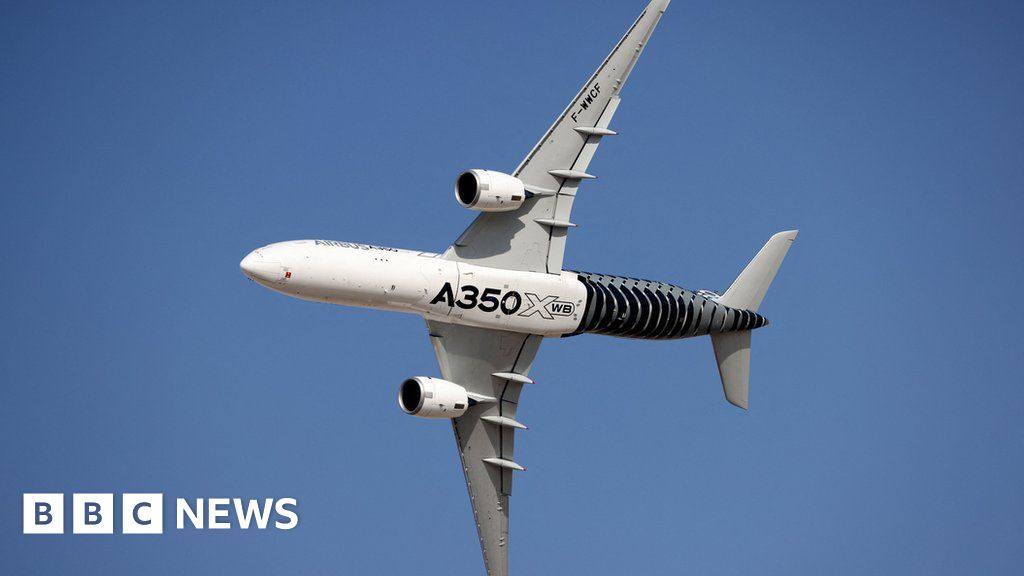
However, aircraft and crew need to be ready for any scenario, so Project Dragonfly tested an automatic emergency descent system.
The idea is this technology will take over if the pilots need to focus on heavy decision-making or if they were to become incapacitated.
Under its own control, the plane can descend and land, while recognising other aircraft, weather and terrain.
The system also allows the plane to speak to air traffic control over the radio with a synthetic voice created through the use of artificial intelligence.
It is a lot for the plane’s systems to take on.
One of the challenges was teaching the system to understand all of the information and create a solution, says Miguel Mendes Dias, Automated Emergency Operations Designer.
“The aircraft needs to, on its own, recover all the information. So it needs to listen for the airport messages from air traffic control.
“Then it needs to choose the most suitable airport for diversion,” he said.
Project Dragonfly performed two successful emergency descents.
During the test flights, French air traffic controllers fully understood the situation and the aircraft landed safely.
“It was really an amazing feat,” says Mr Mendes.