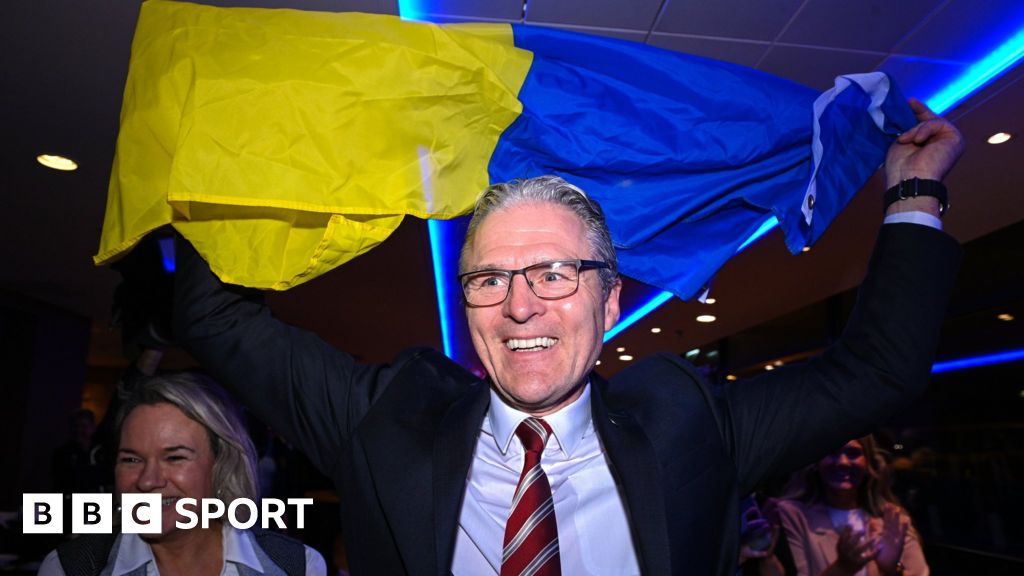







Since then, Burns, as any protocol-observing GAA President-elect, has remained largely in the background and was even spotted at the Athletic Grounds last year wearing a high-vis jacket in a volunteer stewards role.
But he will have to hit the ground running after he becomes the association’s 41st president at Saturday’s Congress session in the Canal Court Hotel.
His in-tray is going to be full and his renowned diplomatic and conciliatory tones will be required to help steer the GAA towards full integration with camogie and ladies football by the 2027 target date, which happens to be the year his presidency concludes.
Former Irish president Mary McAleese is driving the project and one suspects, her relationship with Burns will prove vital over the next three years in ensuring that integration of the three GAA bodies becomes a reality.
Even prior to his first presidential bid, Burns spoke of the “juggernaut” of spending on inter-county teams which exceeded 40m Euro in 2023 and even knowing where to start in terms of tackling that and indeed the issue of brown envelope payments to club managers may already have given the Silverbridge man sleepless nights.
Other issues that he will have to be at least seen to tackle include promoting hurling in the weaker counties while Burns and director general Tom Ryan will also have to deal with increasing calls for the GAA to come up with considerably more than the £15m it has committed to the Casement Park rebuild amid the project’s spiralling costs.
As the 56-year-old Armagh takes a sabbatical from his school principal’s role during his three-year term, he will be logging the miles as he travels around the island and indeed abroad to meet the Irish diaspora.
However, this looks a GAA presidency that will be stretched far beyond the ceremonial as he becomes the first man from north of the border to serve in the role since Peter Quinn in the early 1990s.