









It’s an elegantly simple solution to an age-old problem: to protect crops from hazards, keep them covered.
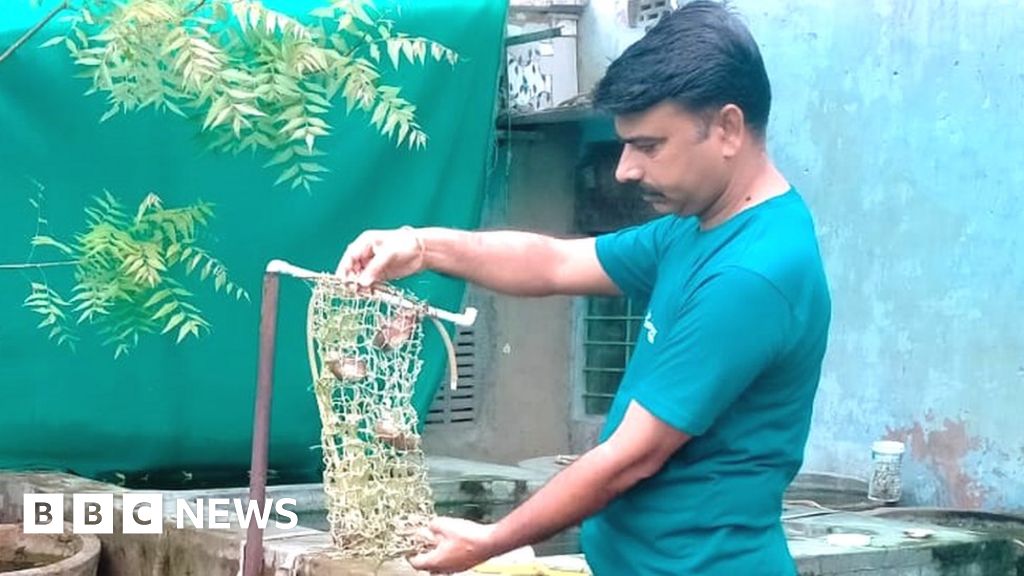
Nets are commonly used to keep out pests in vegetable production, particularly in high-value areas like seeds.
Yet in fruit production the use of nets is still being explored and tested, according to Mirella Aoun, an agronomist and researcher at Bishop’s University in Quebec, Canada, who has been studying agricultural nets for over a decade.
Prof Aoun explains that initially fruit producers placed nets over trees primarily to protect them from hail damage. Now they are experimenting with nets that can protect against insects.
The mesh size of insect-proof nets is determined by the local conditions, including the nature of the insects.
Of course that could shut out the insects that farmers really do want – pollinators like bees.
One option is to apply the nets after the pollination period. Another is to open the nets during the day, while bringing in beehives.
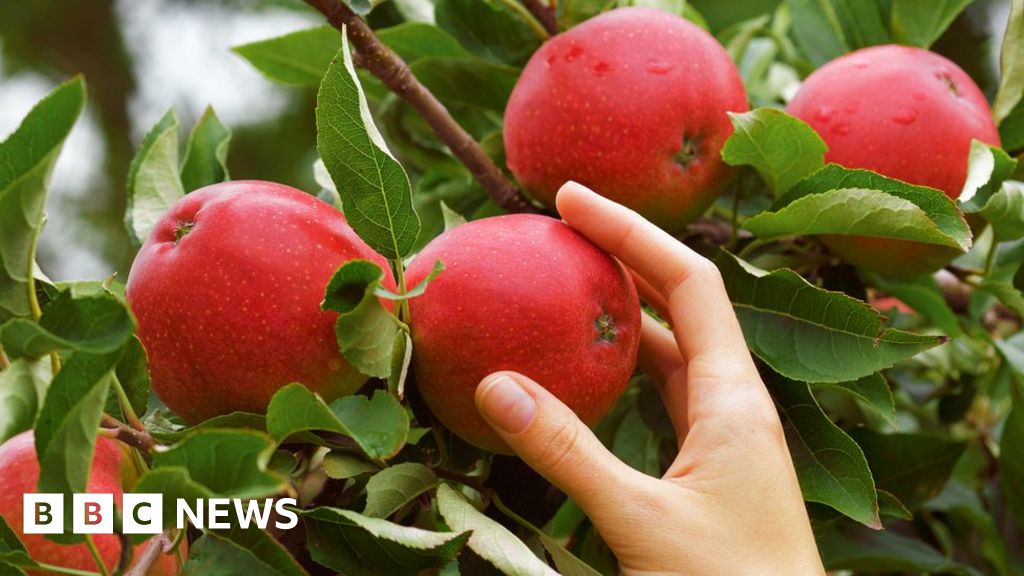
Tree nets are particularly well established in French and Italian apple orchards, where nets draped over rows of apple trees, external limit the movements and egg laying of codling moths. This has helped farmers to get rid of persistent pests and reduce their use of costly and environmentally damaging chemical pesticides.
There are benefits to fruit lovers as well. “When you know that you have less pesticide residues from crops that are under exclusion nets, it’s good news for consumers,” says Prof Aoun.
Nets are also seen as a way of tackling the effects of climate change. Warmer conditions have seen the resurgence of some types of insects and diseases.
Some regions are seeing more intense periods of drought and heavy rain and nets can help with that.
For instance, depending on the location, the type of net, and the way it is used, a netting system can shield against the solar radiation that leads to heat stress and inhibits trees’ photosynthesis.
But the introduction of a net could mean a more humid environment around the tree – not helpful for crops prone to fungal diseases in wetter climates like the northeastern US and Canada.
But some researchers are working on hydrophobic nets, external, where a treatment using a botanical pesticide essentially makes the nets water repellent.