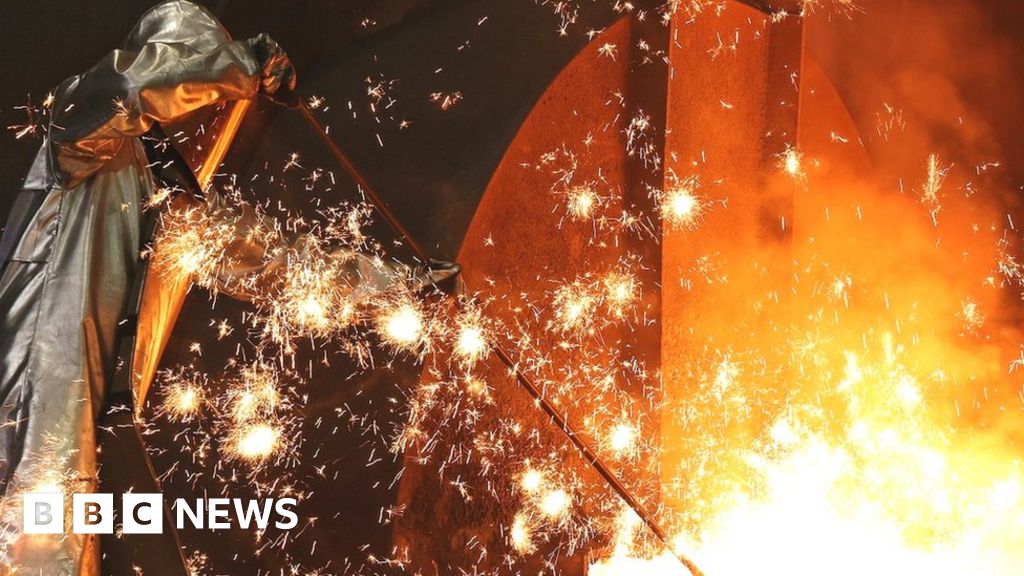







In the UK, the government is reported to be ready to stump up £600m to help Britain’s two largest steelmakers switch away from coal-fired blast furnaces. However the country remains “very much a laggard” in green steel circles, according to Chris McDonald, chief executive of the UK’s national innovation centre for steel and metals, the Materials Processing Institute.
“A big reason for that is that currently the UK has very high energy prices compared with other countries, and that means it makes the steel industry unsustainable and it makes investment less attractive in the UK.”
Another challenge, says Mr McDonald, is figuring out how to negate high unemployment in industrial heartlands if existing steel plants shut down, or require different skill sets from employees once they’ve been remodelled. “It’s more complicated, I think, than just opening up the market and allowing new entrants to come in, because we’re trying to manage a green transition and to manage the social consequences at the same time,” he argues.
In Boden, the arrival of H2 Green Steel is being viewed as a major opportunity for job creation in an area that’s been crying out for new industries for decades.
The small military town shrunk after army budget cuts and closure of a large hospital in the region in the 1990s, resulting in thousands of people moving elsewhere to find work.
“This is our biggest opportunity in more than 100 years,” says the town’s Social Democrat mayor Claes Nordmark. “This will mean jobs, it will mean more restaurants, it will bring more sponsorship to our football and ice hockey and handball team and so on… it means everything for us.”