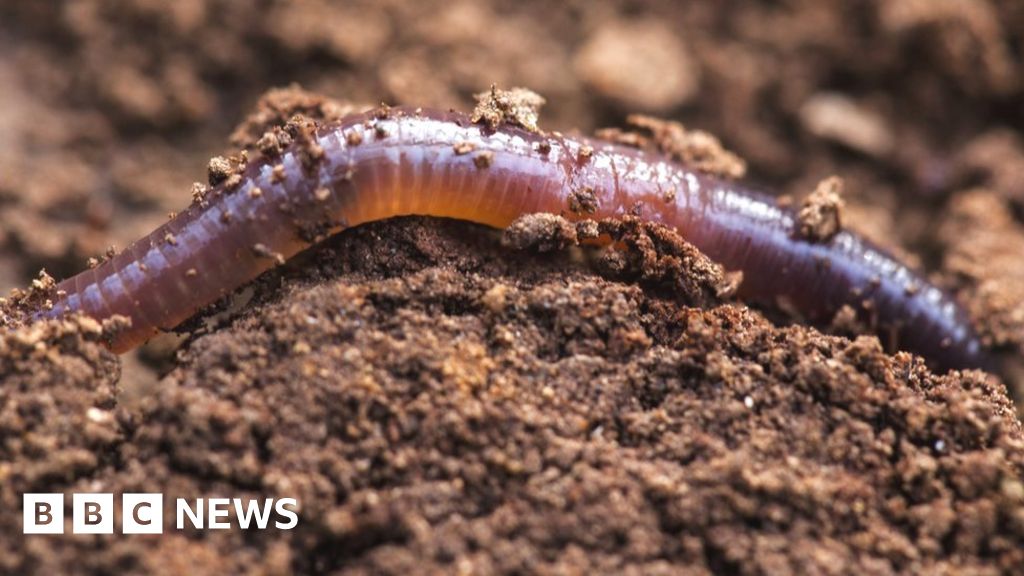












The GE researchers believe that it would be useful for installing underground utility infrastructure, in a less environmentally damaging manner than some conventional drilling. They’re aiming for a lower cost as well.
“We see a real commercial opportunity for this,” says John Lizzi, who leads the Robotics and Autonomous Systems division at GE Research. He believes key areas include fibre internet, electrical power and charging infrastructure for electric vehicles.
However, GE is limited in what it can publish and publicly disclose about this research, given the military funding. And of course not every roboticist wants to work towards military applications.
Apart from those, eventually earthworm-like robots could also be applied in areas like mining, agricultural sensing, and planetary excavation.
An especially important use could be in search-and-rescue. Prof Ozkan-Aydin talks of the recent earthquakes that devastated Turkey, her country of origin. A tiny wriggling robot with a camera attached could have been useful there for determining where to concentrate rescue efforts, without disturbing the ground.
But plenty of research will need to be done first. Certain essential features of earthworm biology – like the mucus they secrete to lubricate their passage through soil and keep themselves from drying out – are challenging to incorporate into a robot.
“Because it’s a natural system and it has evolved for so many years, it’s very difficult to replicate,” acknowledges Mr Das of IIT.
So nobody is going to mistake one of these robots for a living earthworm. And some people have been overly optimistic about bioinspired systems in the past.
“I’m a bit disappointed that more artificial muscle technology hasn’t made it across the ‘R&D valley of death’,” admits Kellar Autumn, a biologist at Lewis & Clark College in the US.
Like his work on gecko-inspired adhesives, he believes that artificial muscles are following the “10/10 rule of innovation” – 10 years to discover, and another 10 to reach a market.
If these earthworm-inspired robots do eventually reach a market, they could someday be tunnelling away beneath our feet, helping to lay down the equipment that keeps our societies functioning.