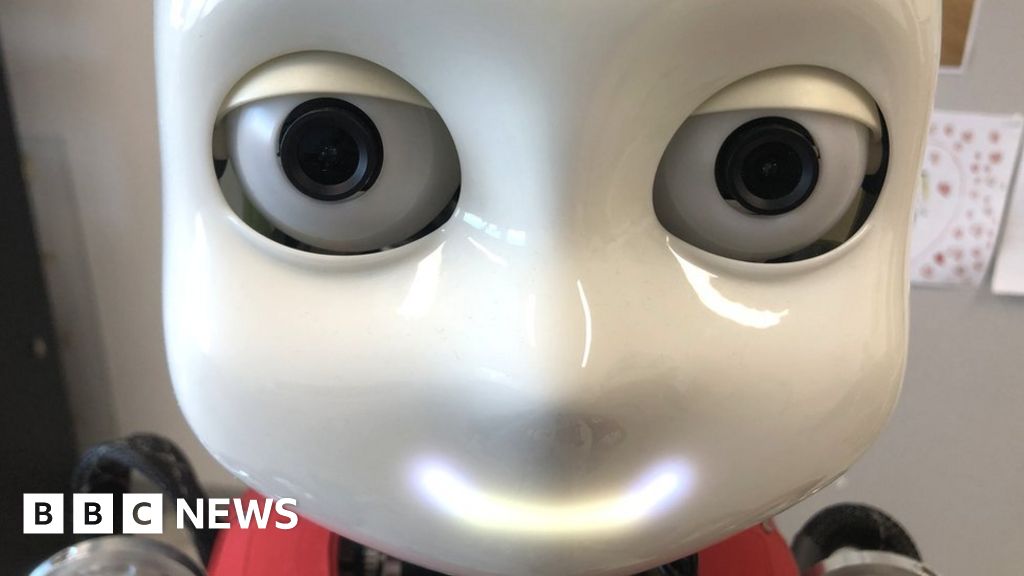











The CONTACT team use a software program that partially randomises the intervals between single and double blinking. After all, blinking fixedly wouldn’t look very natural either.
Over at Disney Research, roboticists have joined forces with character animators to develop a research prototype for realistic robotic gaze. The aim is to design an expressive system of eye gaze that is easy for animators to control in order to convey subtle emotion.
With elements like motion curves of eyelids, “we can kind of isolate these individual behaviours, which makes it much easier to really concentrate on getting small aspects and small details correct,” says James Kennedy, a research scientist at Disney Research.
They’ve patented their system, external of robotic sensing and control of eye gaze. This includes software for processing images taken by a camera in the robot’s chest, and generating control signals for movements like opening and closing the eyelids.
Mr Kennedy says that the research remains more experimental, and isn’t yet being applied in Disney’s theme parks. “The goal here was to really select a single social cue that we were interested in and push it as far as we could in making lifelike believable motion and behaviour that we felt would provide a platform for engagement with people.”
The technology would need to be refined in order, for instance, for the eye gaze system to remain believable in longer close-up interactions with humans, external.
Another general challenge would be getting humanoid robots to begin syncing their blinking patterns to those of humans, as humans do in conversation.
These types of challenges remain compelling to some roboticists. And, contrary to exaggerated pop culture depictions of androids that are indistinguishable from humans, blinking is one tiny example of the many complexities that still keep robotic interactions from seeming completely natural.
When trying to replicate a mechanism as tiny and sometimes underappreciated as blinking, “actually you reveal how complex this mechanism is, and then how much subtle movement there is,” notes Mr Kennedy. “And that’s where we have this really great opportunity for exploration and invention.”