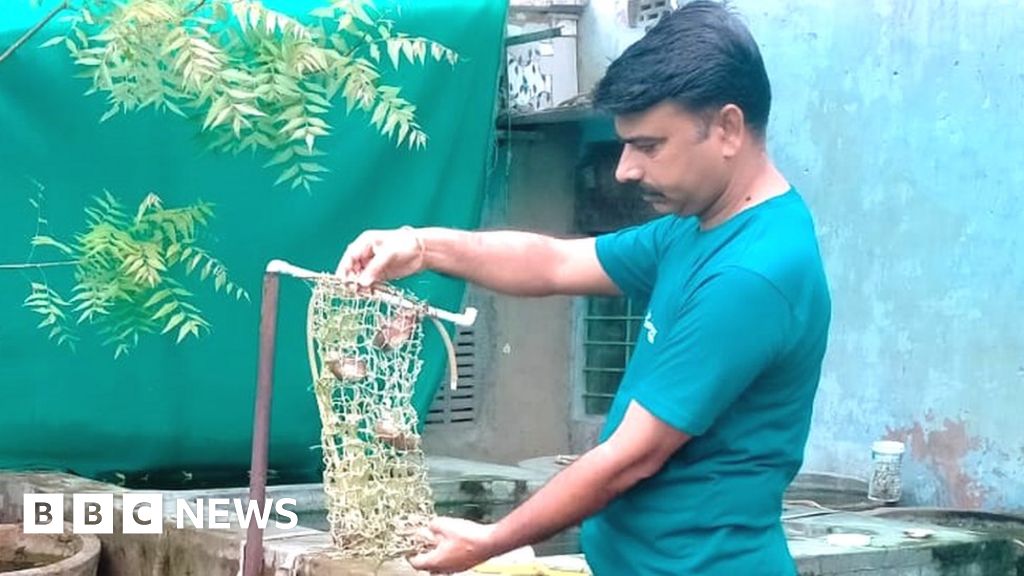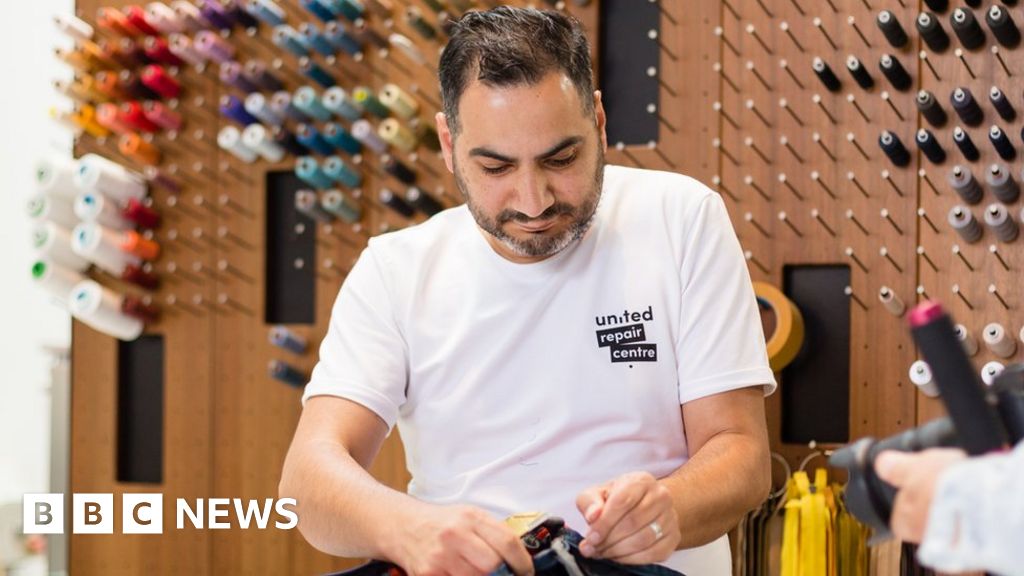














At United Repair Centre (URC), located next to the popular indoor food market Foodhallen in Amsterdam, Bakri Zaitoun is busy repairing the sleeve of a dark blue Patagonia puffer jacket.
Mr Zaitoun, a tailor from Syria who arrived in the Netherlands in 2018, is among eight refugees working as tailors at URC, which was founded last year to help extend the lifespan of clothing by fixing garments for brands and their customers.
Through a translator Mr Zaitoun explains that he has been a tailor for 25 years, but when he first arrived in the Netherlands he had to do all sorts of jobs. I asked him if it’s good to be tailoring again and he gives me a big smile.
Mr Zaitoun’s work is a small part of Amsterdam’s effort to become a circular economy.
A traditional industrial economy uses raw materials to make products which are discarded when they are no longer wanted, sometimes before the end of their useful lives.
The circular economy aims to break the link between economic activity and using up the earth’s resources. This may involve reusing, repairing, and sharing materials and products.
“Circularity is the hottest topic in the fashion industry right now,” says Thami Schweichler, chief executive at URC, an organisation he set up through his social enterprise Makers Unite, a creative textile platform.
“Every brand is looking at how they can be sustainable. Repairs will be part of the future of circularity for brands.”
There needs to be a systematic solution if change is to happen, he says. “It’s not going to happen through the consumer.”
Currently working with five brands including Patagonia, Scotch & Soda and Decathlon, companies send garments needing to be repaired to URC, which aims to fix goods within a week.
Turning around over 400 repairs a week, or roughly 20,000 a year, Mr Schweichler says the target is to reach 200,000 repairs per year by 2026.
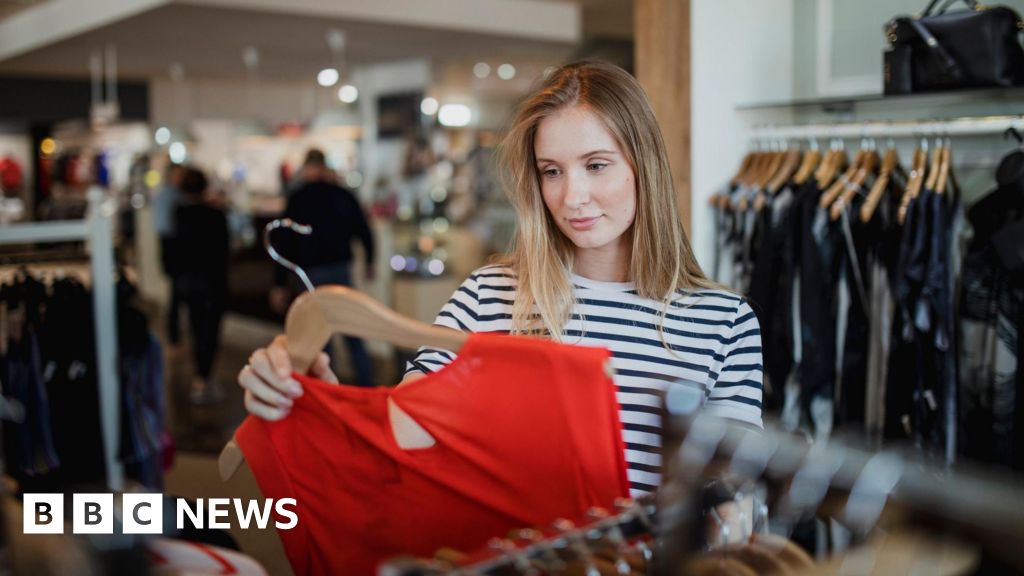
Swelled by the rise of fast fashion, the clothing industry is known to be one of the most wasteful sectors, with three-quarters of our clothing ending up burned or buried in landfill, according to the World Economic Forum, external.
According to the Ellen MacArthur Foundation, external, clothing production doubled from 2000 to 2015 while there was a 40% drop in the amount of time clothing was worn.
While sustainability is on the agenda across many countries, in the Netherlands the government has set out bold plans to make the economy circular as quickly as possible.
In 2020 the Amsterdam declared itself the first city in the world to commit to building a circular economy, focusing on food and organic waste streams, consumer goods, and the built environment.