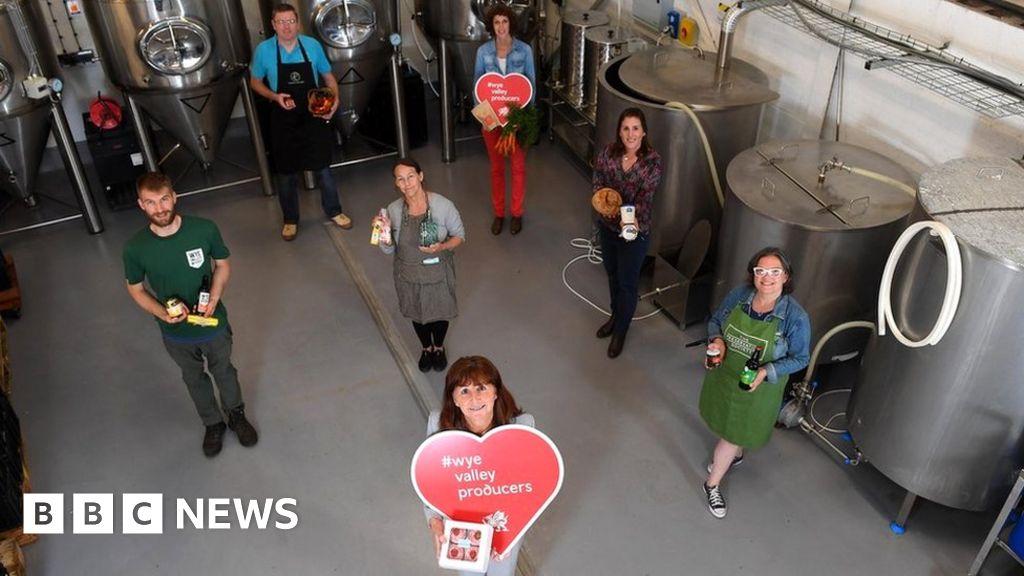











With other members including a cider-producer, butcher, coffee-roaster and two breweries, they now have a website where people can order from all the firms. Customers then collect everything in one go from a weekly drive-through market.
As mentioned, Wye Valley was set up as a cooperative. But what exactly is that? Put simply, it is a business that is owned by its members and democratically run.
It could be, as in the case of Wye Valley, a group of small firms that come together. Or it may be a collective of self-employed workers who run a single business, or even a larger retailer – such as the Co-Op supermarket chain – whose members include millions of its customers who have signed up.
The common factor is that there aren’t any external shareholders, and profits are either reinvested, or shared among the members.
It all sounds a bit old-fashioned, and the co-operative movement was indeed founded in the 19th Century. But there are today more than 7,000 co-operatives in the UK, and a whopping three million around the world.
Many, both within the UK and elsewhere, say that being a co-operative has made them more resilient to the pandemic than if they had been stand-alone, standard businesses.