











The US military has conducted strikes on Iranian targets after President Donald Trump accused Iran of a “foolish violation” of its truce following an attack on a cargo ship in the Strait of Hormuz.
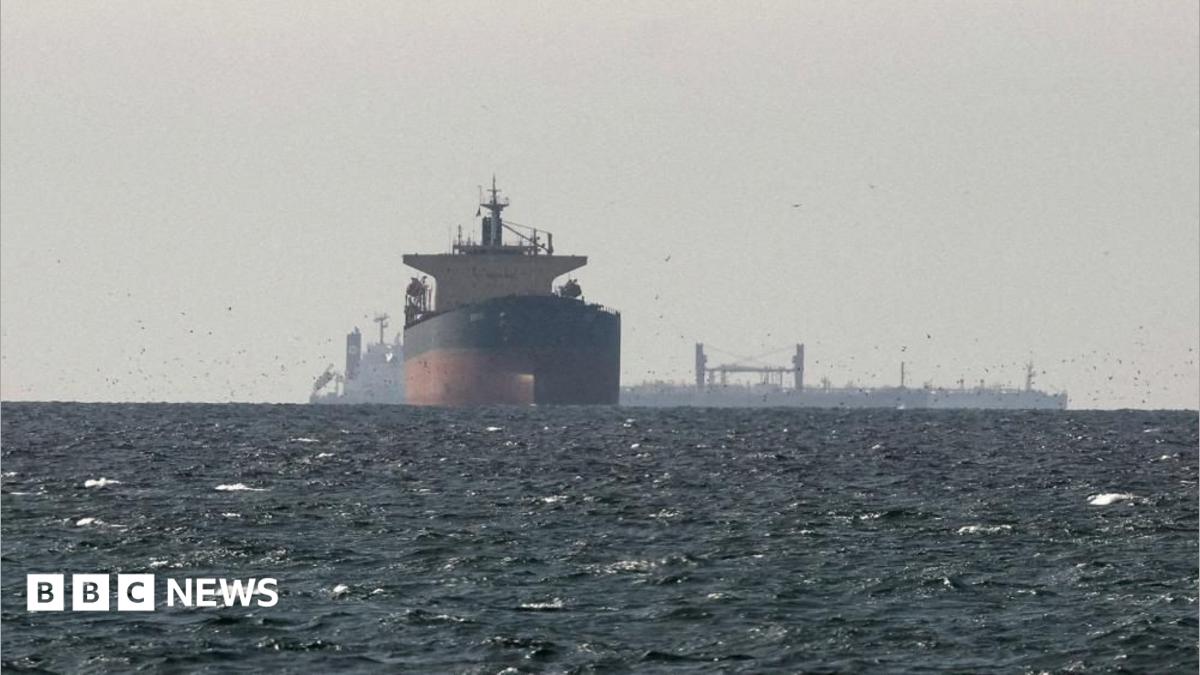
US Central Command said it had struck missile and drone storage facilities and coastal radar positions on Friday, in response to a drone attack on a cargo ship on Thursday which halted a planned evacuation of sailors stuck in the region.
Tehran said the cargo ship was attacked because it was using an unauthorised route to transit through the Gulf waterway.
After the US strikes, Iran in turn accused the US of violating their interim deal and said it had struck targets linked to American forces.
US Central Command – or Centcom – described the American strikes as “a powerful response” to the drone attack a day earlier.
“The unwarranted aggression against commercial shipping by Iranian forces clearly violated the ceasefire,” it said in a statement.
“Furthermore, Iran’s dangerous behaviour undermined freedom of navigation as commerce increasingly flows through the vital international trade corridor.”
Centcom said the US military would “continue to provide safe passage coordination and support to commercial vessels transiting the strait”.
Iran’s foreign ministry released a statement on Saturday morning, saying the country had carried out strikes against targets linked to American forces in response, and blamed the “treaty-breaking US regime” for the situation.
Iran’s Islamic Revolutionary Guard Corps (IRGC) said its navy had struck US military positions in the region, without providing further details. The BBC contacted the Pentagon for comment.
“If the aggression is repeated our response will be more extensive than this,” the IRGC added.
Tehran effectively closed the strait after US and Israeli attacks against Iran began at the end of February.
The shutdown of the critical waterway for oil and gas shipments caused a spike in global oil prices and choked off shipments of other crucial commodities such as fertiliser.
The US and Iran agreed on 17 June to end hostilities under a 14-point memorandum of understanding, which had also called for Iran to use its “best efforts for the safe passage of commercial vessels with no charge for 60 days”.
In a post on X following the US retaliatory strikes, Vice-President JD Vance said that if Iran “has disagreements about how the MOU is being applied, they can pick up the phone”.
“But violence will be met with violence,” he added.
Ebrahim Azizi, head of the Iranian parliament’s national security commission, though, said on social media that the US had “attacked Iran in the middle of negotiations once again”.
He continued in his social media post: “This reckless violation of the ceasefire will, as always, lead to retreat and regret on their part. The blame game does not work anymore.”
Speaking to reporters at the White House on Friday afternoon, Trump refused to be drawn into questions on how the US might respond to the drone attack, or whether he viewed the ceasefire as still intact.
“You’ll find out,” he said. “I don’t like the fact that they took a shot yesterday. They shouldn’t be doing that.”
Asked why he believed Iran would conduct such an operation, Trump said only that “they’re a little bit different”.