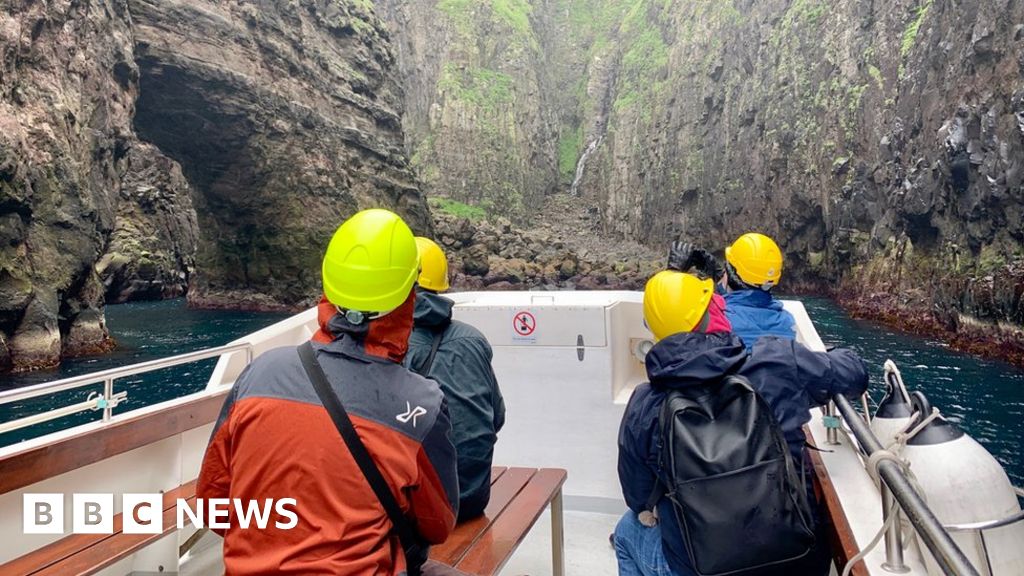







She adds: “Tourism is still a small industry here [2% of the economy]. But it’s broadening the labour market. It’s created jobs in the service sector and creative area.”
The hope is that this economic diversification will encourage young islanders to stay rather than move abroad. A deep recession in the early 1990s saw thousands of people leave.
Then in the early 2000s, unemployment rose sharply again when disease rocked the salmon industry. Of the dozens of salmon companies at the time, most went out of business.
“We’re [still] quite vulnerable, but compared to where we were 15-20 years ago, it’s much, much stronger at this time,” says Mr Rogvi.
“There has been an ongoing struggle for, I think, at least 50 years to get the younger people to stay here.”
Many go to university abroad, and often don’t return. But with improved job and education prospects that’s begun to turnaround.
Meanwhile, rising immigration, coupled with Europe’s highest fertility rate, has seen the population climb to the already mentioned 52,000.
“For us that’s an enormously high number,” says Mr Rogvi.