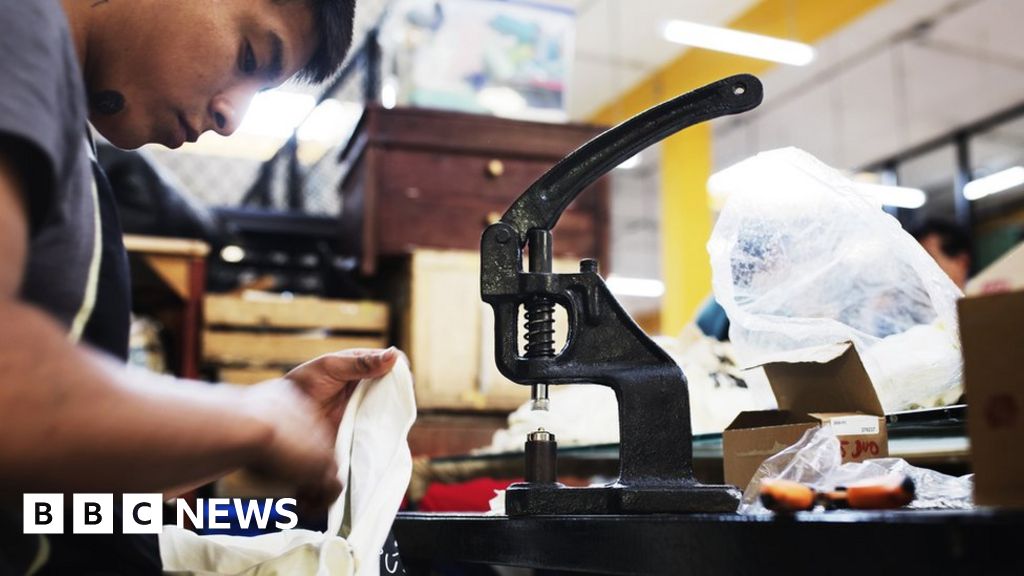
















Today the business has around 50 workers across three Peruvian jails, two male and one female, and makes around 1,000 garments a week. A not-for-profit enterprise, the prisoners earn a commission from the sale of each item they make.
Those that get involved need not have any prior experience of clothing manufacturing, and the crimes for which they are serving their sentences range from petty theft to murder.
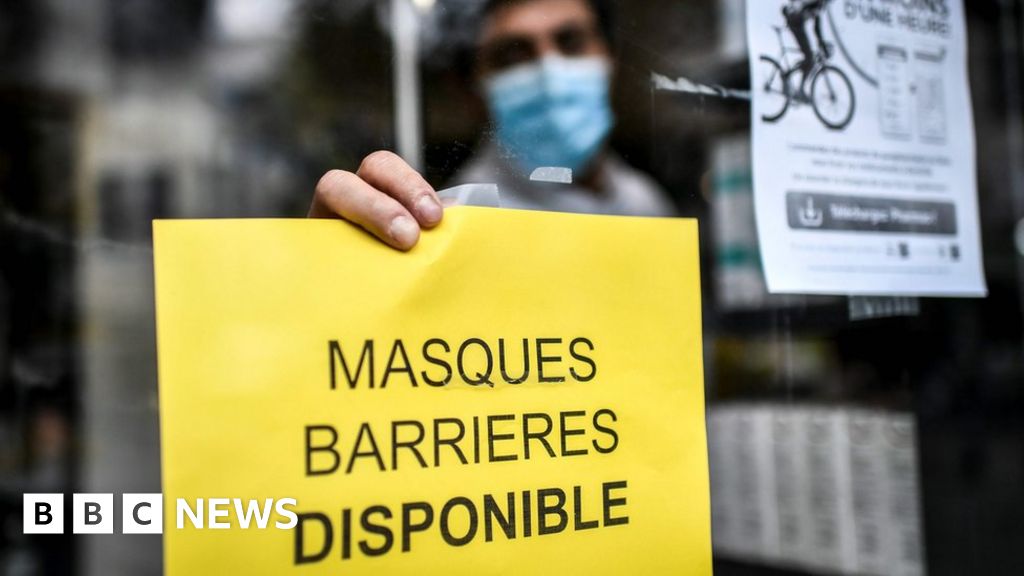
Pieta now has three stores in Lima, but most of the clothes – which since the coronavirus outbreak include face masks – are sold via its website. It gets most of its international orders from Australia, the US, and other countries in South America.
The prisons are paid equivalent to the Peruvian minimum wage, but Mr Jacob says that he did not base production in the jails to save money.
“The textile industry in Peru is quite well developed, and because we have a fairly large production, we could reduce our costs significantly if we moved outside the prison,” he says.
“But I don’t want to exploit people and make them feel bad. We are a social project, and it would not serve any purpose if we moved the production.”