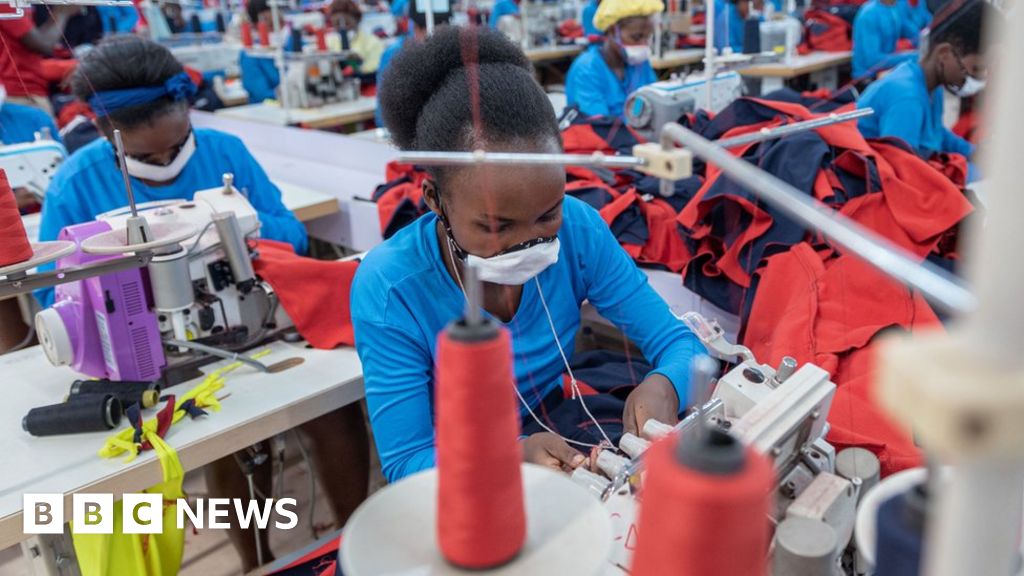








Rwanda’s efforts to boost its domestic garment industry have seen it fight a lonely, and continuing, trade battle with the US that dates back to 2015.
Back then the six members of the East Africa Community (EAC) block of countries – Burundi, Kenya, Rwanda, South-Sudan, Tanzania, and Uganda – announced that they would all put in place high tariffs on the import of second-hand clothing or “chagua”.
The idea behind the de-facto ban was to stop the importation of large quantities of cheap used clothing, mostly from the US and the UK, which the African nations said were stifling the growth of their nascent garment industries.
The extent of the issue for the six countries was shown by widely reported 2015 figures from the US Agency for International Development (USAID). The USAID said that in that year, the EAC states accounted for almost 13% ($274m; £213m) of the global imports of used clothing.
The study also found that almost two thirds of the combined populations purchased some second-hand clothes.
Keen to hang on to its share of these exports, the US responded that the proposed ban would violate free-trade agreements, and it threatened to remove the EAC countries from the African Growth and Opportunity Act (Agoa)., external
Enacted back in 2000, this allows 39 sub-Saharan African nations to export thousands of goods duty-free to the US.
After the US’s announcement, all EAC members except for Rwanda backed out. It went on to introduce a tariff of $4 per kilogram on imports of used clothing in 2018. The US responded by putting tariffs of 30% on Rwandan clothing, where there had previously been none.