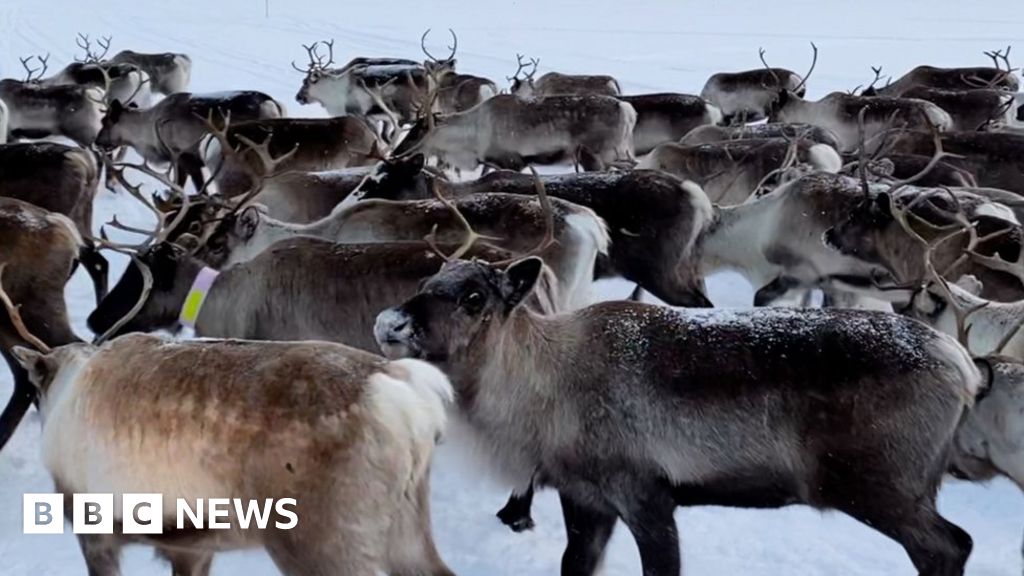










But Ms Omma argues that Sami communities don’t always have the resources to engage in discussions with businesses or politicians.
“At the moment, my Sami village – we get requests from different sorts of industries every week,” adds Ms Omma. “The work burden is just too high, so people get sad, and it has an impact on their mental wellbeing.”
These debates feed into much bigger, complex discussions about the cumulative impact of a boom in carbon-cutting industries in northern Sweden.
The region is already home to one of Europe’s biggest electric battery factories, powered by renewable energy sources. And a fossil fuel-free steel plant is being built that will use new hydrogen technology instead of traditional blast furnaces.
There are also plans for new mines, designed to extract the raw materials used in these types of industries.
Meanwhile, Sweden is one of Europe’s largest electricity exporters, partly driven by big investments in hydropower in northerly regions over the last few decades.
According to Maria Petterson, a professor in environmental law at Luleå University of Technology, investing in fossil-free industries is broadly necessary for Sweden to meet its climate goals.
But she is concerned that the competing interests between reindeer herders and plans for more wind farms and mines have already increased tensions in some local communities.