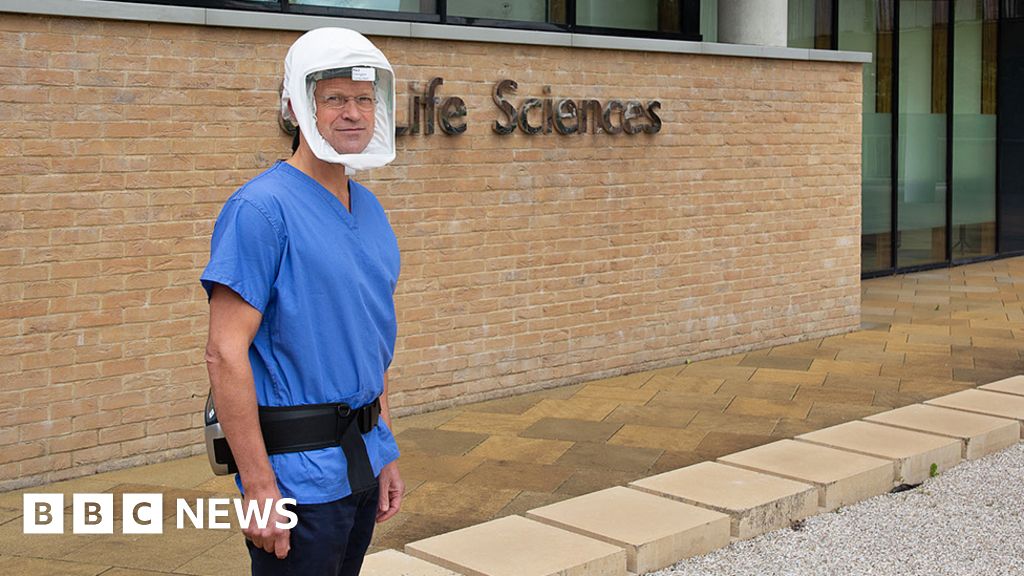















The PeRSo respirator was not only used in Southampton, but across 16 other NHS trusts. Crucially, staff absences were lower at Prof Elkington’s hospital than the rest of the country.
He and a colleague, Prof Hywel Morgan, both later won an MBE for their work producing the respirator, but despite talks with Dyson, they decided not to patent their design. Instead they made it open source – publishing the design on the internet so that others could reproduce it in South Africa among other countries.
Fast-forward to 2023 and supplying PPE remains a “deeply emotive issue” for everyone “because so many people got burnt,” says one senior NHS manager who asked not to be named.
He specifically references how procurement managers at the height of the crisis found themselves desperately paying high prices for products largely from China, some of which turned out to be unsuitable or even fake.
Three billion pieces of PPE were used by the NHS in just the first six months of the crisis, according to research., external
However, the Department for Health and Social Care accounts for 2020/21 reveal that £673m worth of PPE bought during the pandemic was unusable, while £750m of equipment was not used before its expiry date.
Relying on just one supply country was always a horrible risk, says Willy Shih, the Robert and Jane Cizik professor of management practice at Harvard Business School who studies global supply chains.
He says that the primary challenge with PPE is: “Governments not buying until they really urgently need it… demand is very spiky.”
Prof Shih wants to see strategic reserves or national stockpiles created.
He also makes the point that if you want to retain domestic manufacturing capacity on-tap, “it costs you money to keep that manufacturing facility warm and functioning”.
Aside from the environmental cost, spending money to ship disposable PPE from China, storing it in warehouses, and getting rid of the waste after it has been used is all painfully expensive.
Analysis from sustainability experts like Dr Chantelle Rizan, clinical lecturer in sustainable healthcare at Brighton and Sussex Medical School, suggests that the best way of tackling this problem is threefold.
Firstly, by drastically reducing the use of gloves, and replacing them with more hand washing. And combining this with manufacturing PPE closer to home and, crucially, extending the use or reuse of things like masks and gowns.