






Middle East correspondent
 BBC
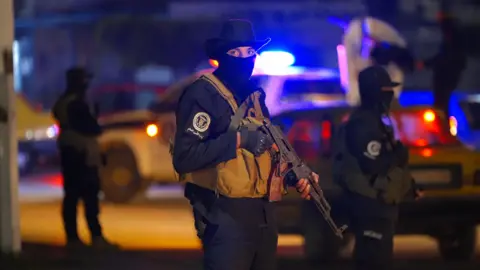
BBCOne of the men accused of taking part in a wave of sectarian violence against Syria’s Alawite minority two months ago has told the BBC that he and other armed civilians who travelled to the area were advised and monitored by government forces there.
Abu Khalid said he had travelled as a civilian fighter to the Mediterranean coastal village of Sanobar on 7 March, to help battle former regime insurgents.
“The General Security department told us not to harm civilians, but only to shoot at insurgents who shot at us,” he told me.
“There were eight men with me, but it was a large group, and the General Security department was overseeing things so that no-one would vandalise the village or harm the residents.”
He later filmed himself shooting dead a 64-year-old village resident, Mahmoud Yusef Mohammed, at the entrance to his house.
Abu Khalid, who has now been arrested, insisted Mahmoud was an armed insurgent – but video he filmed of the incident does not support his account.
Military police told the BBC there had been no coordination between security forces and Abu Khalid.

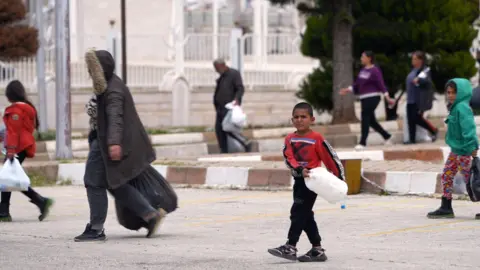
Human rights groups estimate that almost 900 civilians, mainly Alawites, were killed by pro-government forces across Syria’s coastal region in early March.
The Alawite sect is an offshoot of Shia Islam and its followers make up around 10% of Syria’s population, which is majority Sunni.
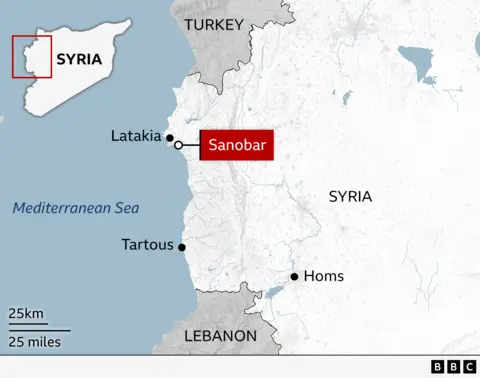
Syria’s coastal area – a stronghold of the former regime – has been largely sealed off, but a BBC team gained access, speaking to witnesses and security officials about what happened in Sanobar.
The violence came a day after fighters loyal to the country’s overthrown former President Bashar al-Assad, who is an Alawite, led deadly raids on government security forces.
The new Sunni Islamist-led government had called for support from various military units and militia groups to respond to those raids – but that escalated into a wave of sectarian anger aimed at Alawite civilians.
Witnesses told the BBC that several different armed groups had targeted Alawites for summary executions. Some also said that government security forces had battled violent and extremist factions to protect Alawite villagers from attack.
 Reuters
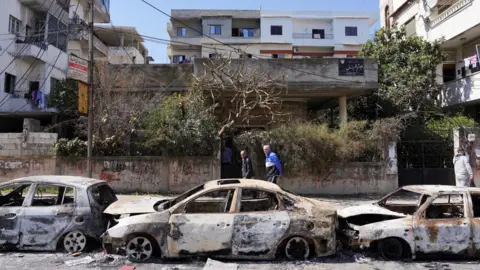
When the violence along this coast erupted, the village of Sanobar was right in its path. Some 200 people were wiped out from this small Alawite village, over the course of a few days in early March.
Almost two months after the killings, there have been no funerals in Sanobar.
A mass grave now squats beside the winding village road. Hurried burials have cleared the remaining corpses.
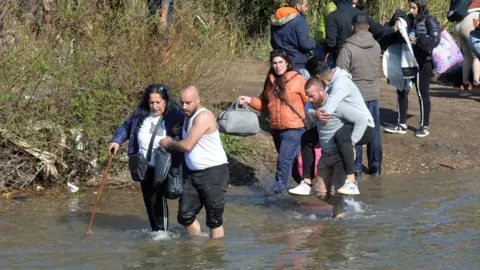
This is now a village of women and secrets. Most survivors are still too scared to speak openly but their stories, shared with us privately, are often strikingly similar.
The body of Mahmoud Yousef Mohammed lay outside his simple breeze-block house in Sanobar for three days after he was shot dead.
His wife, daughter and grandchildren, sheltering in a neighbour’s house, were too afraid to emerge from hiding and bury him, as armed groups roamed the village.
His family said Mahmoud was a polite man, known and respected in the village; a farmer with a military background, who sometimes worked as a minibus driver.
His house, on a quiet street at the edge of the village, stands less than 300m (985ft) from the main highway where, on 6 March, army officers from Syria’s former regime led co-ordinated attacks on the country’s new security forces.
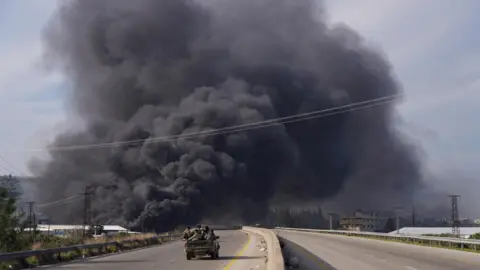
For two days, government forces battled former regime fighters, known locally as “filoul” (“remnants”), in the villages along this coastal highway, calling for support from allied militia groups who helped push Bashar al-Assad from power last year.
An array of armed supporters responded to the call, including foreign jihadist fighters, civilians and armed units now nominally part of the new Syrian army, but still not fully under government control. All are groups now accused by survivors of civilian executions.
 Reuters
All day on 7 March, Sanobar residents listened to the sounds of intense fighting around the village, as families hid in their houses.
Then the targeting of civilians began.
“All day, many groups entered our house,” one survivor from Sanobar told me. “They weren’t from the [military] groups based here, but from Idlib, Aleppo and elsewhere. Some wore camouflage uniforms. But the ones who killed us were wearing green uniforms with a mask.”
“They stole everything, insulted us, threatened the children,” she continued. “The last group came around 6pm. They asked, ‘Where are the men?’ and took my father and my brother Ali. We begged them not to kill them. They said, ‘You’re Alawite, pigs,’ and shot them in front of our eyes.”
Some time that day, Mahmoud stepped outside the building he was sheltering in with his family. One of his relatives said he could smell toxic fumes from a fire nearby, and wanted to check on his own house.
He never reappeared.
“We found the next morning that he had been killed,” the relative told us.
The story of what happened to Mahmoud began to emerge when a video of his killing surfaced on social media, filmed by the man who shot him.
In the video, Abu Khalid is seen grinning and taunting Mahmoud from the back of a motorbike before shooting him six times.
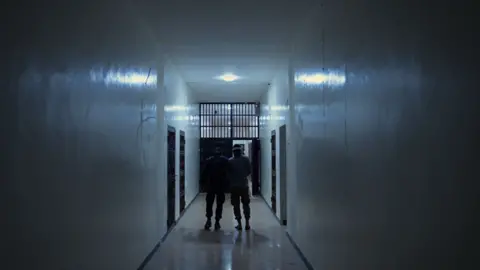
To meet Abu Khalid, we travelled to Idlib, the heartland of transitional President Ahmed al-Sharaa’s Islamist group, Hayat Tahrir al-Sham (HTS), which swept Syria’s old regime from power last December.
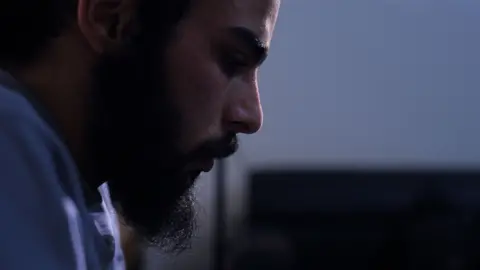
Now in military police custody pending an investigation, Abu Khalid shuffled into the room, blinking and stretching as his blindfold and handcuffs were removed.
A young man in camouflage pants, he seemed keen to talk, explaining that Mahmoud was not a civilian, but an insurgent who was fighting in the village that day, and had been carrying an 8.5mm-calibre rifle when he shot him.
“I turned the camera on him and told him to sit down,” Abu Khalid told me. “He was running away and he wanted to kill me, so I shot him in the shoulder and the leg. When I got closer, I saw him moving his hand as if he had a bomb or a gun. I was afraid, so I killed him.”
But the video Abu Khalid filmed of the shooting – its location and timing verified by the BBC – does not support his account.
A former member of the British special forces confirmed that there was no weapon visible on or near Mahmoud at any point in the video.
And at no point does Abu Khalid ask the 64-year-old to stop or sit down – nor does he appear scared or under threat.
Instead, he is shown whooping and grinning on the back of the motorbike, before calling out to Mahmoud, “I’ve caught you, I’ve caught you! Look at the camera!”
He then shoots him three times in quick succession. Mahmoud falls to his knees inside the doorway of his house.
“You didn’t die?!” Abu Khalid calls out, as he follows him to the building.
Mahmoud can be heard begging for his life, before Abu Khalid shoots him three more times at close range.
 EPA
EPAInternational law forbids the killing of civilians, the injured, or disarmed fighters.
Khaled Moussa, from the military police unit now holding Abu Khalid, said he had gone to fight in Sanobar without coordination with the security forces.
“Civilians are not supposed to be there during military operations,” Mr Moussa said. “He made a mistake. He could have captured the person, but instead he killed him.”
But Abu Khalid has little regret for what he did.
When he cries during our interview, it’s not for Mahmoud – or even for himself. It’s for his little brother, killed in a bomb attack by President Assad’s former army in 2018 as his family sat down at home to break their Ramadan fast.
“He was eight years old, and I held him while his soul left his body,” he told me, before tears start flowing down his face.
“I was raised during the revolution, and saw nothing but injustice, blood, killing and terror. They ignore everything that happened in Syria before the liberation, and focus on the video I filmed.”
He tells me his family’s latest casualty was his 17-year-old cousin, killed while fighting insurgents near Sanobar. “He was completely burned,” he said. “We took him away in a plastic bag.”
“If I was going for revenge for what they did to us, I wouldn’t have left any of them.”
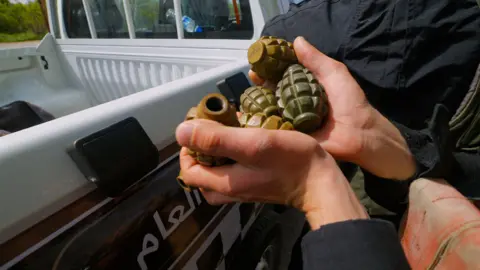
The insurgent attacks on 6 March ripped open sectarian fault-lines that Syria’s new Islamist government had tried to paper over with promises of tolerance and inclusion.
The Syrian Network for Human Rights (SNHR), an independent monitoring group, says former regime loyalists killed at least 446 civilians, including 30 children and women, and more than 170 government security forces, most of them on 6 March.
Those attacks resurrected deep-seated anger over the repressive dictatorship of former President Assad, with Alawite civilians seen by some as complicit in the crimes of his regime – and as part of the insurgency that followed his fall.
The SNHR says the government’s crackdown on insurgents on the coast “escalated into widespread and severe violations”, most of which were “retaliatory and sectarian”.
The group says that pro-government forces and supporters killed at least 889 civilians, including 114 children and women, in the days following the insurgent attacks.
Amnesty International has investigated dozens of attacks it says were “deliberate”, “unlawful” and targeted at Alawite civilians.
One video from Sanobar shows a pro-government fighter marching through the village chanting, “ethnic cleansing, ethnic cleansing”.
Lists of victims from the village, compiled by local activists, include the names of more than a dozen women and children, including an 11-year-old, a pregnant woman and a disabled man.
The survivor who watched gunmen kill her father and brother said the family showed their killers the men’s civilian ID cards to prove they hadn’t been part of Assad’s army. But it made no difference; their only accusation, she said, was that the family were “Alawite pigs”.
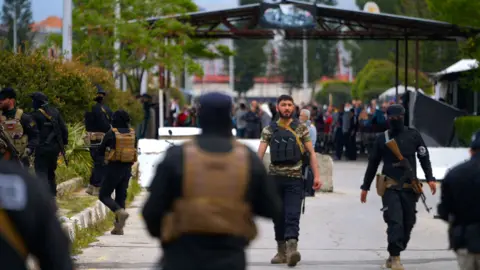
Separating civilians from insurgents is key to the new government’s plan to secure the country, and its promise to protect minorities.
But that will require prosecuting those responsible – and proving it can control its own military forces and armed allies.
Sharaa’s HTS group – once the local affiliate of al-Qaeda and still designated as a terrorist organisation by the UN, US and UK – formed the backbone of his new army.
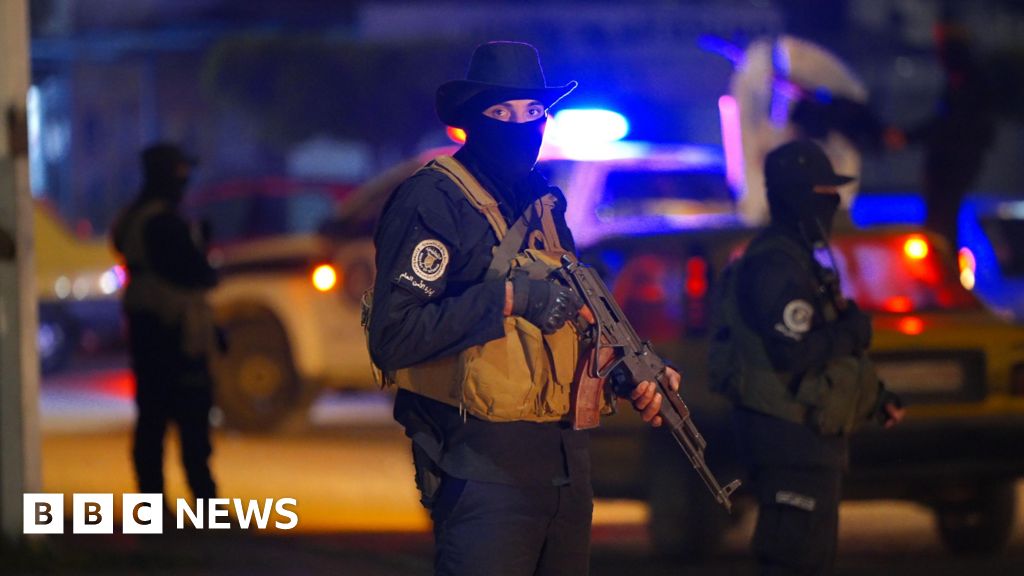
There has been rapid recruitment to fill the ranks of a new civilian police and the General Security Forces.
Training has reportedly been shortened and many units say they are under-equipped. One commander looked wistfully at my body-armour and radio when we joined them on a patrol. “We don’t have those,” he said.
Turkish-backed militia and jihadist fighters who once fought alongside HTS to remove Bashar al-Assad are among those named by witnesses and human rights groups as carrying out summary executions.
In the streets of Sanobar, the names of Turkish-backed units, now supposedly under government control, have been graffitied on the walls, and the BBC heard several reports that their men were still present in the village.
Some videos of alleged violations also appear to show the presence of vehicles and uniforms from the official General Security Forces – prompting Amnesty International to call for investigation.
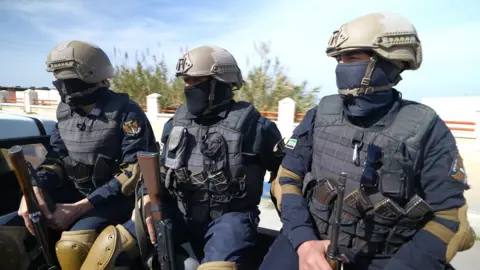
The head of the General Security Forces for the Latakia region, Mustafa Kunaifati, told me that civilians with friends or relatives in the army were responsible for most of the crimes, but admitted that members of armed groups had also been involved – including what he called “individual cases” from his own General Security units.
“It happened,” he said, “and those members were also arrested. We can’t accept something like that.”
After the former regime fighters were expelled and the situation brought under control, he said his men “began removing all the rioters from the area and arresting anyone who had harmed civilians”.
Several witnesses have confirmed to the BBC that Mr Kunaifati’s forces intervened to protect them from other armed groups.
One of Mahmoud’s neighbours in Sanobar told us they evacuated him and his family 30 minutes before Mahmoud was killed.
And the witness who described the killing of her father and brother said the General Security Forces had helped them escape the village, and later to return and bury their relatives.
 Reuters
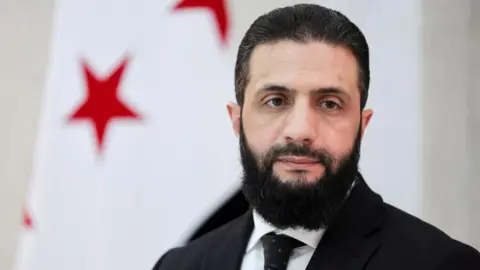
Sharaa has vowed that “no-one will be above the law” when it comes to prosecuting the killings on the coast.
A special committee is currently investigating both the initial 6 March attack by insurgents, and the violence by pro-government forces that followed. The BBC understands some 30 people have been arrested.
But in a country still waiting to see justice for the crimes of the past, this is a delicate moment.
Some have argued that the government’s decision to issue a general call for support after the insurgent attacks made violence predictable, even inevitable.
Many Alawite villagers say they want the government’s General Security Forces to police their villages, and for other factions, now positioned at some checkpoints and bases, to leave.
Two months after the violence here, government security forces are acting as the shield against their own hard-line allies.
The future of Sanobar is a test for the future of Syria, and the country’s other minorities – Druze, Christians, Kurds – are watching.
To see how far Syria’s Islamist government can hold this wounded country together without resorting to the repression of the past.