









More than 1,700 prisoners have been released early in England and Wales as part of a government scheme to ease overcrowding in prisons.
One freed prisoner said conditions in prison cells were “terrible,” with inmates exposed to “loads of violence”.
The domestic abuse commissioner for England and Wales told the BBC that some “known perpetrators” of domestic abuse may have been among those released.
The government said offenders jailed for violent offences with sentences of at least four years, sex offenders and domestic abusers were not eligible for early release.
Nicole Jacobs, the domestic abuse commissioner for England and Wales, told the BBC that despite some offences being excluded, some people released “may have been to prison for something else but [be] a known perpetrator of domestic abuse”.
She added that victims of domestic abuse would find early releases “particularly hard” because perpetrators “know where they live”.
There is no single offence for domestic abuse. Certain crimes like coercive control, harassment and stalking were excluded from the scheme, but not others including threats to kill and actual bodily harm. Prisoners convicted of these offences may still qualify for early release.
Baroness Newlove, the victims’ commissioner for England and Wales, warned that not all victims of crime had been made aware of their offenders’ early release date and given the opportunity to seek “protective measures”.
She said that from the beginning of the scheme, she had sought assurances that all “impacted victims” would be informed of any early release dates, affording them the opportunity to request protective measures.
“I understand this has not been possible in every case, leaving some victims unaware of their offender’s early release,” she said in a statement.
The Napo probation union said domestic abusers and sex offenders were among those released.
It described the early prisoner release scheme as a “ticking time bomb that could put public safety at risk”.
In a statement, the probation union said it feared the scheme was “moving the problem from one place to another without properly assessing the risks”.
In response, the Ministry of Justice pointed out eligibility for the scheme was based on the offence, not the offender. Some offenders may have been released early from a sentence for a lesser offence when they had previously completed a sentence for a sexual or violent offence, it added.
Under the release scheme, announced in July, offenders in jails in England and Wales serving sentences of fewer than five years will be released on licence into the community after having served 40% of their sentences, instead of 50%.
Being released on licence means that offenders must adhere to restrictions for the rest of their sentence, including curfews and tagging, and will be supervised by probation officers.
Chief inspector of prisons Charlie Taylor said the government “had no choice but to do something” about overcrowding. But he warned that it was “inevitable that some of these prisoners will get recalled to custody”.
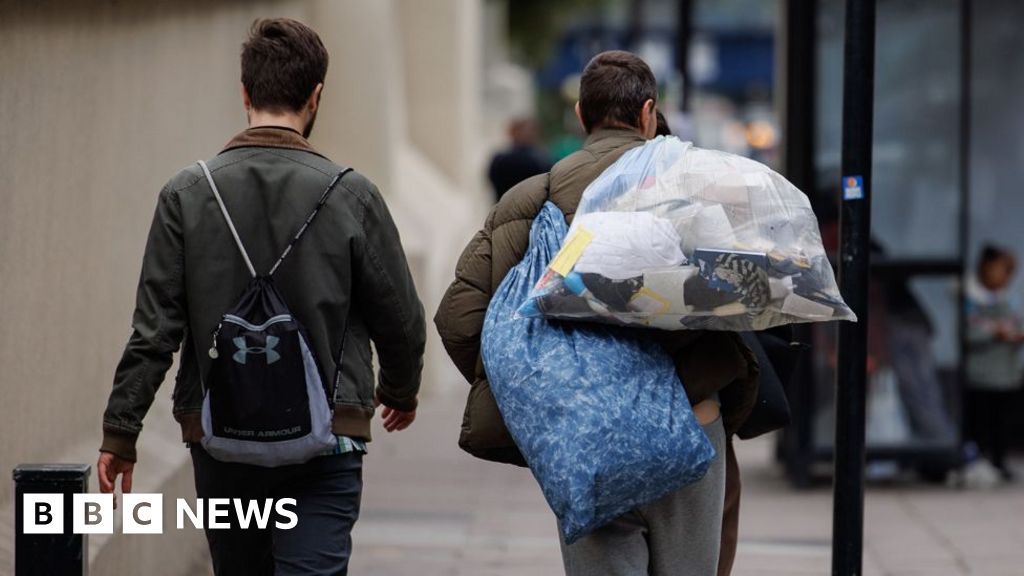
Among those released on Tuesday was John Price, a 34-year-old who told the BBC he had been released four days early from a six-and-a-half month sentence for actual bodily harm in HMP Nottingham.
Price said accommodation had been arranged for him and he was hoping to go back to work.
“I would’ve happily stayed there for the rest of the time if I had to,” he said, but said conditions in the prison were “terrible… there’s loads of violence”.
Ryan Surplice, from Birmingham, was released from HMP Manchester on Tuesday after being jailed for three years for burglary.
“The wings in there are condemned. It is disgusting in that jail, there is water running black out of the taps, rats running around the wings,” Surplice told the BBC.
Another offender, released from HMP Wormwood Scrubs after serving 19 months of a three-and-a-half year sentence for drugs offences, said the early release scheme had been good for his family but added: “I don’t know if I agree with everybody being released early – especially for more serious crimes.”
The early release scheme was triggered by the incoming Labour government days after the general election, but officials had already been drawing it up when the Conservatives were in power.
A Ministry of Justice (MoJ) spokesperson said the government had inherited “a justice system on the verge of collapse”.
“We have been forced into taking difficult but necessary action, with safeguards in place, so we can keep locking up offenders and protect the public.”
Those released under the scheme will be subject to “full probation supervision”, which will include “tough restrictions” in many cases, the MoJ said.