



 BBC
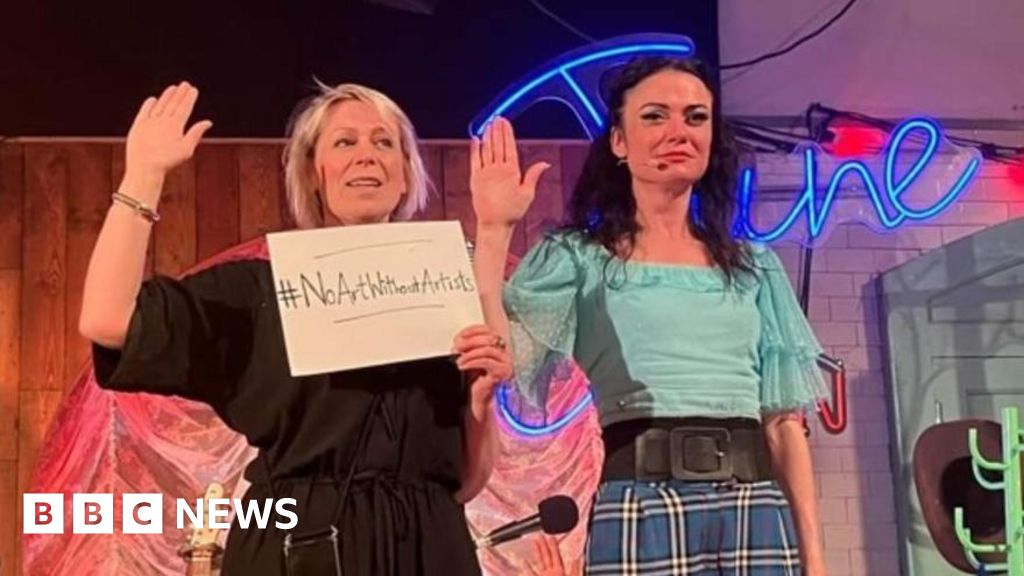
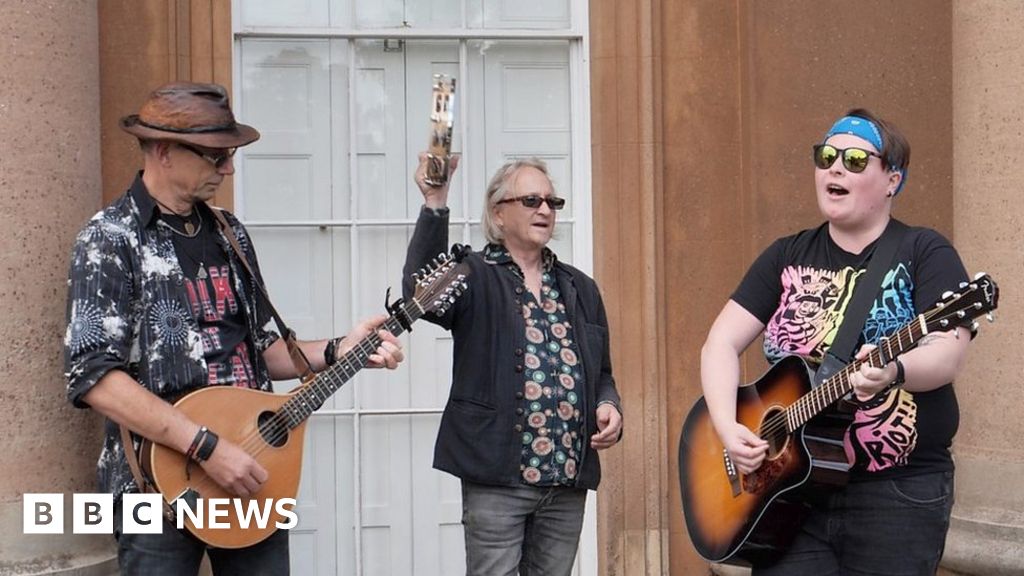
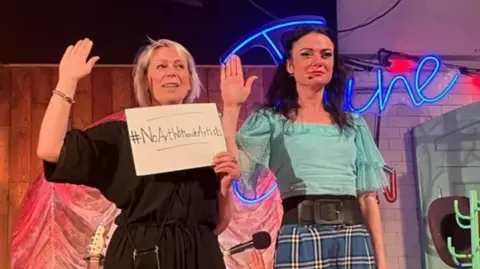
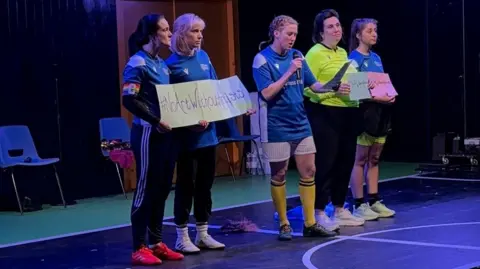
BBCPerformers have called for a major grant for artists to be reinstated as the Edinburgh Fringe Festival came to a close over the weekend.
Last week Creative Scotland confirmed it had closed its Open Fund for Individuals over concerns about Scottish government budgets.
The arts body said uncertainty over millions of pounds of government support had created “critical problems” for the grant which supports artists creating new work.
The Scottish government said it provided significant funding to Creative Scotland each year and would continue to do so.
It comes less than a year after a £6.6m budget cut was reimposed despite being reversed earlier in 2023.
Scotland’s budget is under significant pressure and ministers have been ordered to constrain all but essential spending to help pay for public sector pay deals.
Francesca Heygi, chief executive of the Edinburgh International Festival, told BBC Radio’s Good Morning Scotland that the culture industry was in an “incredibly precarious” position.
“We get it, there isn’t a lot of money out there,” she said. “Our particular festival has been on standstill public funding for 17 years, so it isn’t like we haven’t cut already.
“All of us in the cultural sector have really cut to the bone, there isn’t anymore to cut.
“I think what you’ll see in the next few months is a dismantling of the sector unless somehow we are able to increase the amount of public spending.”
After working in the arts industry for nearly 30 years, Ms Heygi said she “had never known it this bad”.
“We’re ten weeks out from the start of our new financial year and we don’t know what our budget is for next year,” she said.
“So it makes it incredibly difficult to plan, but perhaps more importantly, festivals like ours rely on a really healthy cultural sector in Scotland.
“We need artists and freelancers and theatres and companies up and down the country to be there and be successful. It’s a real worry that funding for the arts is so fragile at the moment.”

She noted that Scottish government ministers had committed to invest an additional £100m to the arts budget by 2028/29.
“And this represents 0.17% of government budget,” she added.
“So if Scotland really can’t afford that then I think that’s a real shame because the rest of Europe spends about 1.5% on culture so we are really, really lagging behind here.”
Funding cuts felt ‘immediately’
Tony Mills, artistic director of Scotland’s national centre for dance, – Dance Base – said closing the fund would have a “massive impact” on dancers.
“I can’t stress enough how important that fund is for sustaining an artists’ practice and their career,” he said.
“Many, many projects I’ve done have been sustained and made possible through that fund.
“If the fund isn’t reinstated, that’s just it really – until something else is done. It’ll just stop and there will be no production.”
He said the effect will be felt “immediately” by independent artists.
Despite the funding cuts, Ms Heygi said she believed the new tourist levy could help to “bolster” some of the infrastructure around the festivals.
But she said transport services should plan services better to reflect the increase in the number of people in the city throughout August.
Full visitor figures are expected later, but about 125,000 people visited the International Festival and over 100,000 visits were recorded at the book festival during the festival season.
The Scottish government said it already provides significant funding to Creative Scotland each year and will continue to do so.
A spokesperson said: “The culture secretary is in regular contact with the sector to discuss the issues it currently faces and how to address those challenges. We will continue to do everything within our powers and resources to protect our world class arts and culture sector.
“We have increased arts culture funding this year, as the first step to achieving our commitment to invest at least £100m more annually in culture and the arts by 2028-29.
“The Scottish budget continues to face significant challenges. We are considering the implications of the actions announced by the Chancellor on 29 July for our public finances, and the next steps required by the Scottish government.”