











To boost overseas awareness, earlier this year Ibrac joined forces with the Brazilian Trade and Investment Promotion Agency (Apex-Brasil) to launch a 24-month promotional drive.
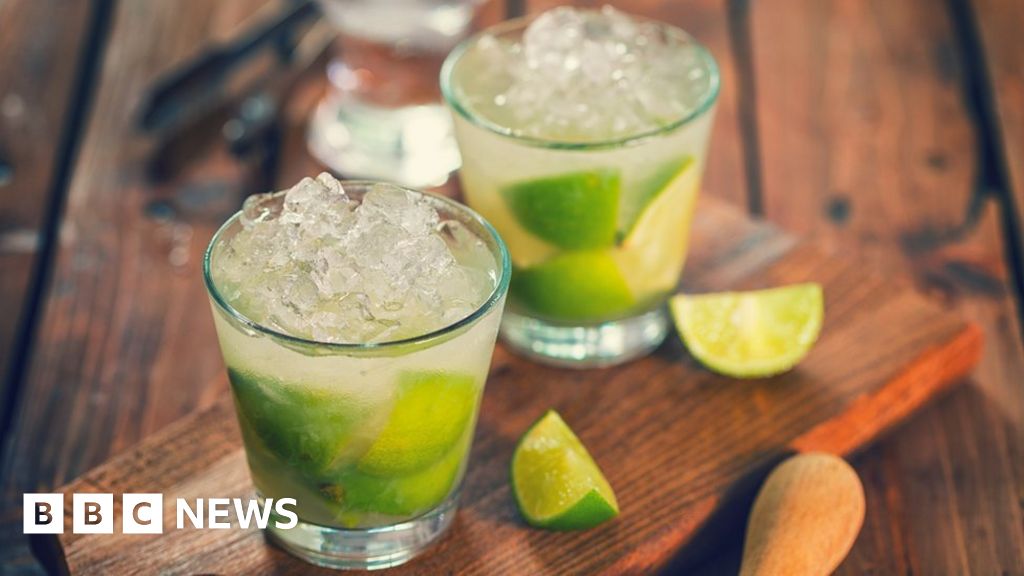
Their work so far includes a website – Taste Brasil , external– which gives information on cachaça, how to make a good caipirinha, and details of other cocktails that can be made with the spirit. Producers are being given financial help to attend international drinks fairs and to find overseas partners.
Much work needs to be done as export sales of cachaça actually fell last year, down 24% to 5.75 million litres,, external from 7.3 million litres in 2019.
Ibrac director Carlos Lima says the problem was a simple one – the pandemic closed bars and restaurants around the world. “Nearly 70% of the cachaça sold abroad is used as an ingredient for cocktails, and consumed in bars.”
The hope is that with greater awareness of the spirit more people around the world will be tempted to drink it at home. Mr Lima stresses its “versatility” as a mixer.
The family-owned Weber Haus is a cachaça producer that is already exporting – it’s been doing so since 2004 and its bottles are now found in 25 countries, with the US being the biggest overseas consumer.
Boss Evandro Weber says overseas sales fell by 10% in 2020, but that they have since improved. “It was a difficult year but things are going in the right direction now. We have had orders from China, France, Italy and Luxemburg, for example.”