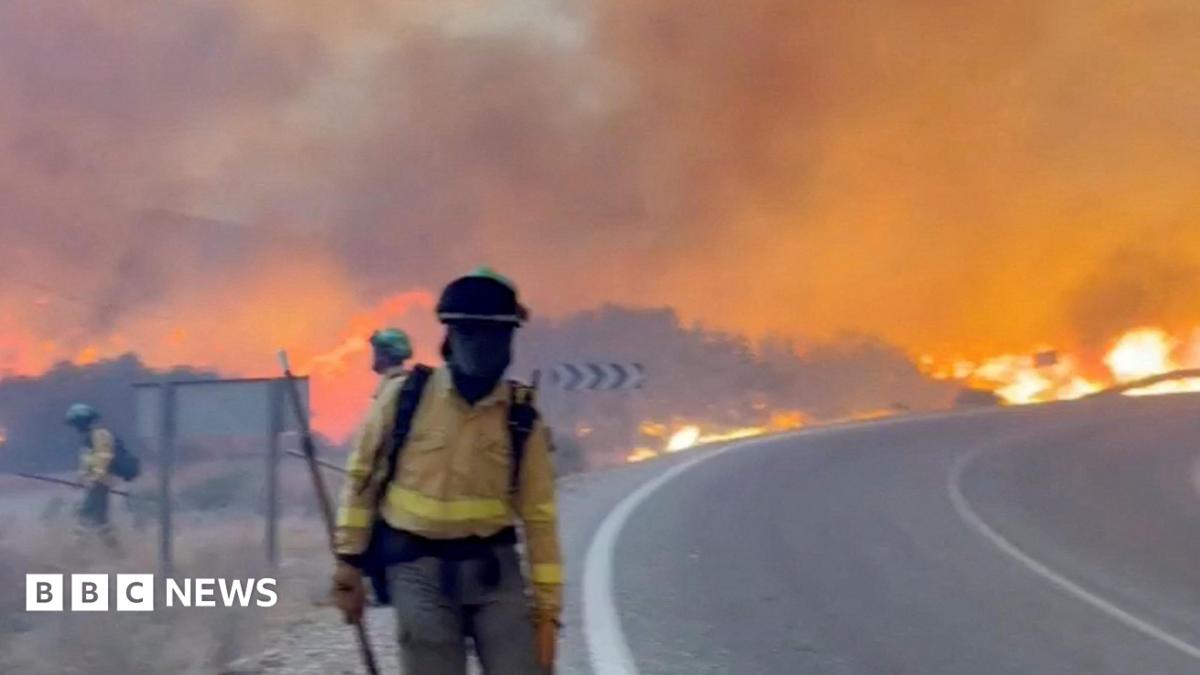














With at least 11 people dead, this is already among the deadliest wildfires in Spanish history.
Prime Minister Pedro Sánchez said in May that Spain would deploy its largest-ever summer wildfire response this year, local media reported.
Spain’s Military Emergency Unit (UME), which is deployed in major emergencies, said it would join firefighting efforts in Los Gallardos.
In June, Spain reached its highest daily average since 1950, and had days where it recorded its highest ever temperatures for that month. Temperatures as high as 42C (107.6F) were forecast in some parts of the country.
Last year, a record 393,000 hectares (971,000 acres) burned in Spain, according to the European Forest Fire Information System (EFFIS), more than six times the Spanish average for between 2006 and 2024.
Climate change is driving up temperatures around the world, and Europe is the fastest warming continent, heating up twice as fast as the global average, according to the Copernicus climate service.
This is causing increased summer heatwaves, greater pressure on Europe’s water supply, and more intense wildfires.
Last year was the European Union’s worst wildfire season since records began in 2006, with more than a record one million hectares – equivalent to about half the land area of Wales – burning across the EU.
The worsening fire season in the Mediterranean has been linked directly to climate change in a separate study by the World Weather Attribution group at Imperial College London.
Experts warn that more frequent and severe fires across Europe are likely to continue in the future.
Are you in the area? If it is safe to do so, share your story.