







 BBC
BBCThere’s nothing new about genetic engineering. By cross-breeding plants and animals, our Stone Age ancestors realised they could boost the amount of food they produced.
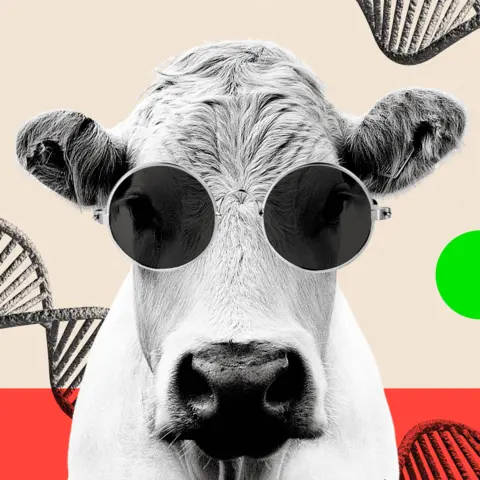
Modern genetics has enabled scientists to do much more: to make precise, targeted changes to the DNA of organisms in a lab. And that, they claim, will lead to new, more productive, disease-resistant crops and animals.
The science is still in its infancy, but gene-edited foods are already on the shelves in Japan: tomatoes rich in a chemical that supposedly promotes calmness; red sea bream with extra edible flesh; and puffer fish that grow more quickly.
In the US, too, firms are developing heat-resistant cattle, pit-less cherries and seedless blackberries.
Supporters of the technology say it could reduce animal diseases and suffering and lead to the use of fewer antibiotics. They also believe it could tackle climate change by lowering emissions of the greenhouse gas methane – produced by livestock such as cows, goats and deer when their stomachs are breaking down hard fibres like grass for digestion.
But opponents say gene editing is still not proven to be safe and that they remain concerned about the implications for animal welfare.
Now a law permitting gene-edited food to be sold in the UK has been paused and some British scientists warn they could be overtaken by other countries.
The new Labour government has pledged closer alignment with the European Union, particularly on regulations that might affect trade. And currently, the EU has much stricter rules around the commercial sale of gene-edited and genetically modified crops.
The EU set stringent regulations on genetically modified (GM) crops decades ago because of safety concerns and public opposition to the technology. Gene-edited crops are covered by the same regulations.
But to scientists, the terms “gene editing” and “GM” refer to different things.
GM, a much older technology, involves adding new genes to plants and animals to make them more productive or disease-resistant. Sometimes these new genes were from entirely different species – for example, a cotton plant with a scorpion gene to make it taste unpleasant to insects.
By contrast, gene editing involves making more precise changes to the plant or the animal’s DNA. These changes are often quite small ones, which involve editing sections of the DNA into a form that, its advocates say, could be produced through natural means like traditional cross-breeding, only much faster.
Dashed hopes
Along with the US and China, the UK is among the countries that lead the world in gene editing. Last year the previous government passed the Precision Breeding Act, which paved the way for the commercial sale of gene-edited food in England.
At the time, many scientists working in the field were overjoyed.
“I thought: ‘Great, this is going to uncork a whole area of activity in the public and private sector’ and we could build an entrepreneurial community for gene editing in the UK,” says Prof Jonathan Napier of Rothamsted Research, a government agricultural research institute in Harpenden.
But he says his hopes were soon dashed.
For the law to come into effect, secondary legislation was required, and this was due to be passed by Parliament this July. But the earlier-than-expected election meant that it was not voted on by MPs and the Act is currently in limbo.
Prof Napier was among 50 leading scientists to write to the newly appointed ministers at the Department for Food and Rural Affairs (Defra) at the end of July asking them to act “quickly and decisively” to pass the secondary legislation.
The Defra minister responsible, Daniel Zeichner, responded to the scientists’ plea last week by stating that the government was “now considering how to take forward the regulatory framework outlined in the Act and will share our plans with key interested parties soon”.
One of the prime movers behind the scientists’ letter, leading expert Prof Tina Barsby, described the minister’s response as a “encouraging” but said that his promise of clarity “soon” had to mean really soon.
Other countries, she said, were pressing ahead with their plans for gene edited-crops at great speed. Thailand recently joined Canada, Australia, Japan, Brazil, Argentina and the USA in adopting regulations around gene editing.
Even New Zealand, which according to Prof Barsby “has historically taken a more cautious regulatory approach to genetic technologies”, has announced that it will also introduce new legislation.
Prof Barsby added: “With our world-leading science base in genetic research, we cannot afford to be left behind.”
But Defra ministers also have to consider the views of environmental campaigners, such as Dr Helen Wallace of Genewatch UK, who have concerns about the “unwanted consequences” of the Precision Breeding Act.
“If you remove these plants and animals from GM regulations then you don’t have the same degree of risk assessment, you don’t have labelling and you risk markets because many of them regulate them as GMOs,” she says.

 Getty Images
Dr Peter Stevenson, who is the chief policy advisor to UK-based Compassion in World Farming (CIWF), also fears that the technology will further add to the intensification of animal farming – with negative consequences.
“The use of selective breeding over the past 50 years has brought a huge number of animal welfare problems,” he says.
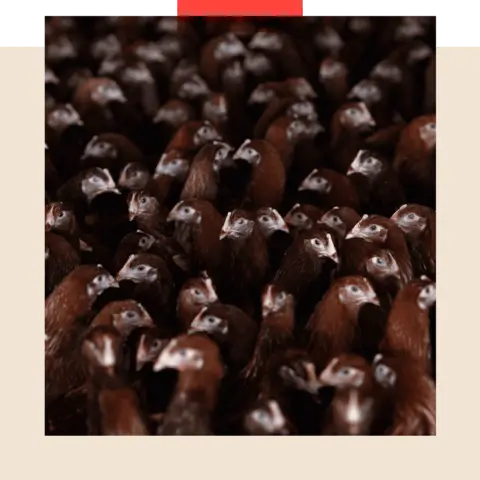
“Chickens have been bred to grow so quickly that their legs and hearts can’t properly support the rapidly developing body and as a result millions of animals are suffering from painful leg disorders, while others succumb to heart disease.
“Do we really want to accelerate this process with gene editing?”
CIWF’s biggest fear is that gene-editing animals to make them more resistant to diseases will mean that the industry will not be motivated to deal with the conditions that lead to the animals getting ill in the first place – such as crowded, unsanitary conditions.
The intensity of the production of milk, meat, and eggs currently leaves many animals “exhausted and broken”, Mr Stevenson told BBC News.
Any genetic alteration to an animal has the potential to have negative effects. But advocates say that for any commercial application, firms have to demonstrate to the regulator that their changes do not harm the animal and back this up with data.
Indeed, many of those who argue for the use of gene-editing technology do so partly on animal welfare grounds – because it could make farm animals more resistant to disease and, since fewer would die as a result, fewer would be needed in the first place.
Another of the letter’s signatories is Prof Helen Sang, who has laid the foundations for using gene editing to develop bird flu resistance in chickens.
“With a virulent strain of (the pig disease) PRRS wiping out pig herds in Spain, African Swine Fever on the march north through Europe, and bird flu virus detected in both dairy cattle and their milk in the US, the importance of enabling all possible solutions, including precision breeding, cannot be overstated,” she said in response to Mr Zeichner.
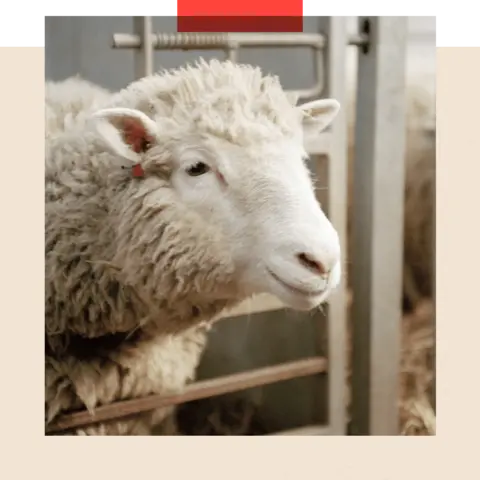
Some of the solutions to the problems Prof Sang mentions are already waiting in the wings. She works at the Roslin Institute, where Dolly the Sheep was cloned nearly 30 years ago. It now leads the world in developing gene-edited animals.
 Getty Images
Prof Sang’s colleagues at Roslin developed a strain of pig that is resistant to the PRRS pig disease six years ago.
They can’t yet be commercially sold to UK pig farmers – but Genus, a British company that has commercialised the PRRS-resistant pigs, has received regulatory approval for their use in Colombia.
The firm also has an application for permission to introduce the pigs to the US market which, if given the green light, could be approved as early as next spring. Genus is also planning to seek approval for the commercial use of their gene-edited pigs in Canada, Mexico and Japan.
Despite the strong opinions on both sides, there appears to be scope for consensus around some applications of the technology.
For instance, Mr Stevenson of CIWF does think it’s at least possible that gene editing could be applied in an ethical way.
To do so, he says, it would need to meet three criteria: that any change it brings about is unlikely to cause animal welfare problems; that its objectives cannot be met by any less intensive means; and that it will not have the effect of entrenching industrialised livestock production.
The PRRS-resistant pigs may tick all three boxes in specific circumstances, according to Mr Stevenson, as do efforts to use gene editing to enable the egg-production industry to produce female-only chicks to avoid the need for billions of male chicks being killed each year when they are just a day old.
Likewise, Prof Mizeck Chagunda, who is the director of the Centre for Tropical Genetics and Health, which is also based at the Roslin Institute, believes both in the positive potential of gene editing and that it needs to be carefully overseen.
He says the technology could improve the lives of the poorest farmers in the world: “70% to 80% of farmers are smallholding farms with two to three animals.” A devastating disease can leave a farmer and their family with nothing.
“So, giving them animals that have been prepared with these technologies would help to protect them from this huge risk to their livelihoods,” says Prof Chagunda.
However, Prof Chagunda warns that there needs to be good, strong regulations in place if this technology is to be accepted by the public.
“Some changes can be too experimental, and we should not be doing them,” he says.
“Scientists should be working with the regulatory authorities to achieve the good products that the farmers and consumers are looking for. We should be doing science that is ethical and at the same time helping humanity.”
The gene editing work at Roslin is led by its director, Prof Bruce Whitelaw, who was a scientist at the institute when Dolly the sheep was cloned. In the past he has been through the process of explaining the potential benefits of seemingly alarming technological developments and he believes there is an urgent need to do so again now.
“We are world leaders in the technology and sitting at top table in terms of developing it,” he says. “If we don’t have the legislation to do that, then our credentials to sit there will slowly wither away and we will lose investment, scientific talent and the boost to our economy to other countries.”
There are lessons here from the past. Genetic modification was rejected by many consumers in the UK, the European Union and other countries 30 years ago because of its perceived unnaturalness. GM crops were publicly trampled by protestors who saw this as a technology that they didn’t need, want or consider safe.
At the same time, scientists were angry and upset that what they believed to be their world-saving technology was being destroyed by, in their view, a wave of anti-scientific hysteria fuelled by the media.
Gene editing seems to be a more palatable version of GM to some, arriving at a time when the debate is less polarised, the need for environmental solutions is even more urgent and there seems to be a greater readiness for some scientists and campaigners to see each other’s perspectives.
Mr Stevenson of CWIF believes that in the long run, there has to be “huge reductions” in global livestock production to deal with climate change, but pragmatically, the fact that climate change is already destroying so many lives, the use of gene editing could be “legitimate”. But he is wary.
“It is hard for me to trust that part of the scientific world who say: ‘Hey now, we have a new way to alter animals.’
“The danger is of animals being thought of as things, units of production, more so than they are now, because we can modify them to make them more amenable to our uses and taking us away from this notion of animals as sentient beings.”
What happens next, not just in the UK, but the rest of the world, depends on whether the advocates of gene editing can convince the open-minded, but wary, such as Mr Stevenson, that they can act safely, ethically and in a way that makes lives better, not worse – for people and animals alike.
BBC InDepth is the new home on the website and app for the best analysis and expertise from our top journalists. Under a distinctive new brand, we’ll bring you fresh perspectives that challenge assumptions, and deep reporting on the biggest issues to help you make sense of a complex world. And we’ll be showcasing thought-provoking content from across BBC Sounds and iPlayer too. We’re starting small but thinking big, and we want to know what you think – you can send us your feedback by clicking on the button below.