


In a briefing with reporters, White House officials denied that domestic politics had influenced the decision.
They said the US measures were sparked by business practices by Beijing that harm the US, for example forcing western companies to share information and then stealing it.
They also said the moves were targeted and said they did not expect them to stoke inflation, contrasting their approach with that of Mr Trump.
The former president, who once called himself a “tariff man”, has campaigned on a proposed across-the-board 10% tariff on foreign imports, which would jump to 60% for goods from China.
He has also attacked Mr Biden for promoting electric vehicles, a move he has argued will destroy US car companies, key employers in states such as Michigan that will be key election battlegrounds in November.
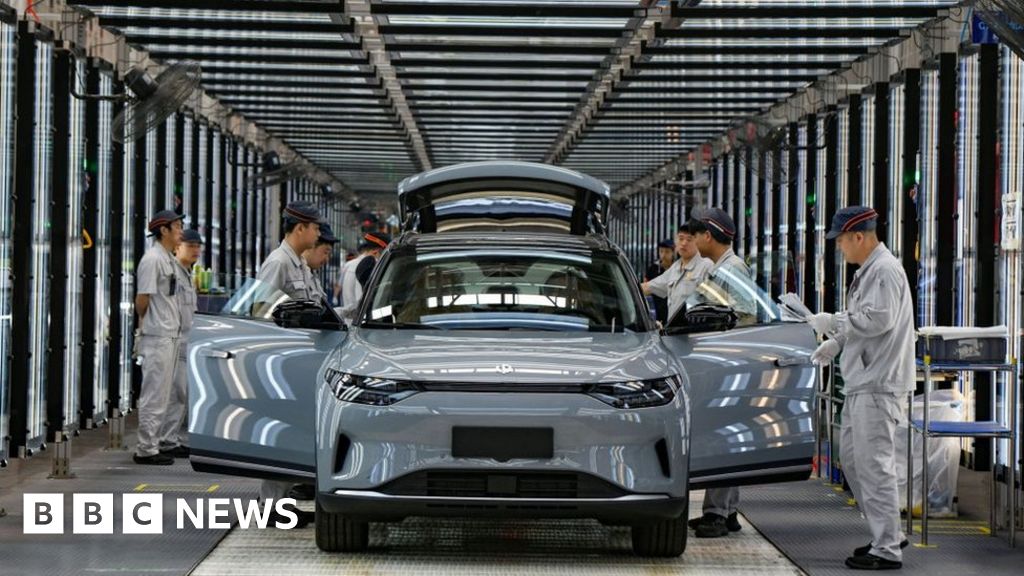
The US already imposes steep tariffs on electric vehicles made in China, which has made sales of such cars negligible.
But Washington has been watching warily as sales by Chinese companies in Europe and other countries increase.
White House officials said ensuring that green technologies were not dominated by a single country was critical to making the transition successful and sustainable in the long run.
While moves targeting electric vehicles are likely to have minimal practical effect, the business world is waiting to see if Europe will take similar steps, said Natasha Ebtehadj of Artemis Investment Management.
The European Union and the UK are among the other places debating moves to curb imports of Chinese-made electric cars, even at the risk of slowing their adoption.
“It’s not really a surprise to investors or to Chinese companies, especially in the run-up to an election where both candidates are not really pro-China,” she said.
“Given the relatively small volume of imports to the US, it’s maybe more interesting what happens next in Europe.”
The US and China have been locked in a trade war since 2018, when Mr Trump imposed tariffs on some two thirds of goods imported from China, at the time worth an estimated $360bn.
The measures prompted retaliation by Beijing, a stand-off that ended in a détente in early 2020 when Mr Trump reduced the rate of some tariffs, while China pledged to boost its purchases from the US.
Those promises have fallen short, but the tariffs have since yielded more than $200bn according to the US, external in new border taxes for the US government, while prompting a major reshuffling of global trade patterns.
Much of that sum has been paid by everyday Americans in the form of higher prices for furniture, footwear and other goods.
However, in a research note, Oxford Economics described the latest plans as “more symbolic bark than bite”.
The firm said they were likely to lift inflation by a negligible 0.01 percentage points, while weighing on growth in a similar way, calling the effect a “rounding error”.
Reporting contributed by World Business Report radio
